finance
ASX Surges Past 8,800 as Gold Rockets and Oil Slumps: What Sydney Businesses Need to Know
A broad market rally, a stunning move in bullion and a sharp fall in crude are reshaping the risk calculus for every Sydney investor, super fund member and business owner heading into the second half of 2026.
How we reported this
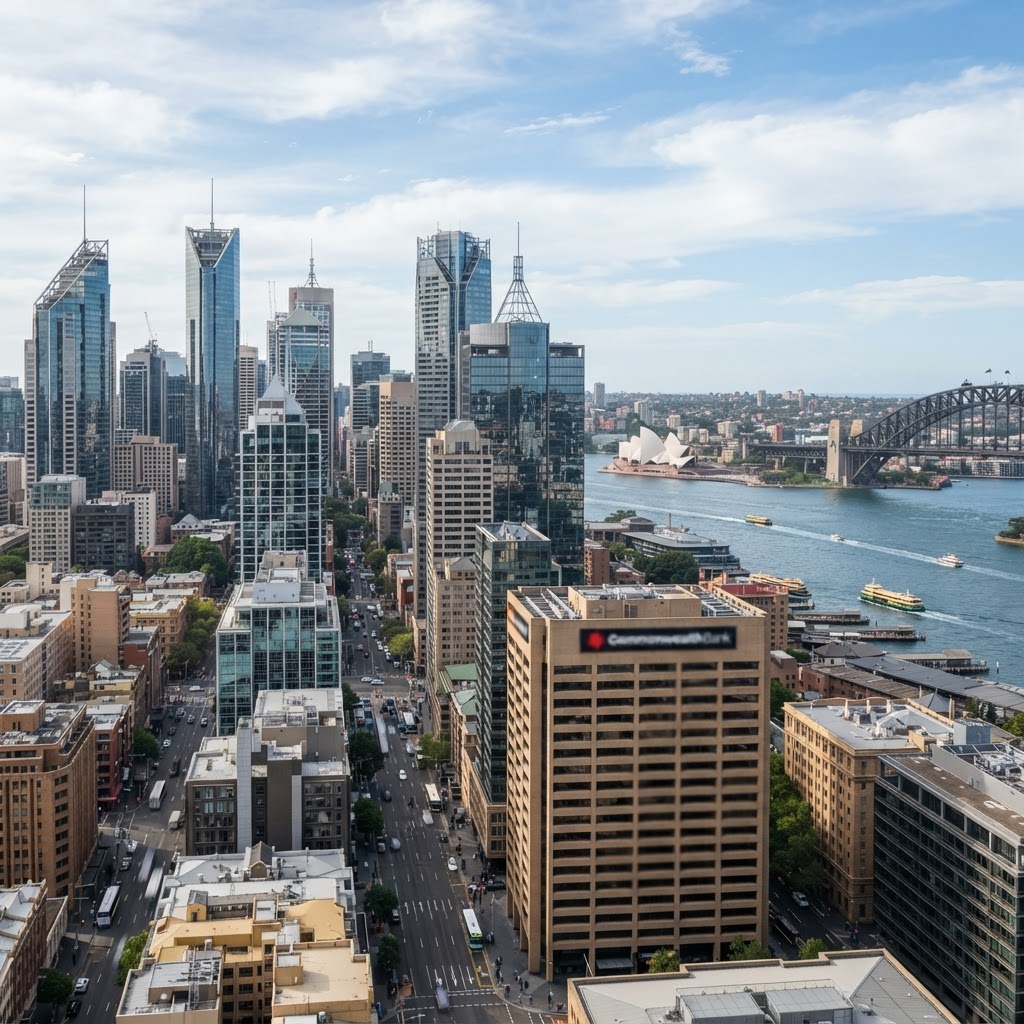
The ASX 200 closed at 8,844 on Saturday, up 0.92 per cent, extending a run that has left the benchmark well above levels that many fund managers in Sydney's Martin Place considered optimistic at the start of the year. The broader All Ordinaries finished at 9,048, also up 0.94 per cent. Both moves came on the back of a powerful session on Wall Street, where the S&P 500 jumped 1.71 per cent to 7,483 and the Nasdaq Composite climbed 1.87 per cent to 25,833, driven by continued strength in technology and a market reading that the US Federal Reserve is unlikely to tighten further in the near term. For Sydney super fund members, whether they sit with AustralianSuper, Aware Super or any of the major retail funds administered by the big four banks, the message is straightforward: growth-oriented balanced options have had a strong week.
The single most arresting number in today's snapshot is gold. Bullion hit US$4,187 per troy ounce, up 4.10 per cent in a single session. That is not a routine commodity move; it reflects a significant flight to perceived safety running alongside the equity rally, a combination that typically signals investors are buying everything at once out of uncertainty rather than pure optimism. For Sydney-listed gold miners and the funds that hold them, the near-term revenue picture is flattering. But the same dynamic should give pause to any business treasurer reading the macro landscape: when gold and equities surge together, markets are often pricing in a currency or geopolitical stress that has not yet fully revealed itself.
The Australian dollar rose 0.68 per cent to US$0.6943, its strongest footing in several sessions. That matters directly to Sydney importers, who will find input costs from the United States marginally cheaper, and to outbound travel businesses and university export operators still reliant on full-fee international enrolments. The flipside hits exporters of commodities priced in US dollars: a higher Australian dollar compresses local-currency revenues from the same tonne of iron ore or coal. Companies with significant USD earnings reporting to Australian shareholders should be reviewing hedging positions this weekend if they are not already.
Oil's Sharp Drop Changes the Cost Equation
West Texas Intermediate crude fell 2.78 per cent to US$68.78 per barrel, a move that cuts in several directions simultaneously. Lower oil prices are broadly deflationary, reducing fuel and freight costs across almost every supply chain that runs through Sydney's port and distribution networks. Retailers, logistics operators and airlines with Australian east-coast operations stand to benefit if the decline is sustained. The Reserve Bank of Australia, which has been watching the consumer price index with considerable attention this year, will note that cheaper crude reduces one of the more volatile components of domestic inflation. That is relevant for every Sydney household with a variable-rate mortgage and for every small business owner whose cost base includes fuel, plastics or synthetic inputs.
Bitcoin reached US$62,835, up 4.72 per cent, recovering ground it had surrendered in prior weeks. Sydney's fintech and digital-asset sector, concentrated in the CBD and inner-city suburbs, will read this as a stabilisation signal rather than a directional breakout, but the move aligns with the broader risk-on tone. For institutional investors at Macquarie or the large super funds that have allocated fractional exposure to digital assets, one day's move in either direction is noise. The more important question is whether regulatory clarity from Canberra, which has been moving slowly on digital asset licensing frameworks, will arrive before the next significant market cycle turns.
Putting the picture together, the short-term momentum across equities, the Australian dollar and gold is positive. But the divergence between oil and everything else deserves scrutiny. Energy sector earnings on the ASX, particularly for companies with upstream oil exposure, will face some pressure if crude stays below US$70. Meanwhile, the banks, which collectively form the largest single weight on the ASX 200, are beneficiaries of a stable rate environment; a sustained rally in bank shares feeds directly into the retirement savings of the roughly one in three working Australians whose super funds hold significant domestic financial sector exposure.
For Sydney business owners and finance directors, the operational priority this week is currency. The Australian dollar's move toward US$0.70 is meaningful for forward purchasing decisions, particularly for technology hardware, imported components and offshore software licences billed in US dollars. Lock in favourable rates where your hedging policy allows it. On the investment side, the gold price surge is a reminder that portfolio diversification beyond pure domestic equities is earning its keep. The second half of 2026 opens with momentum, but the market is clearly hedging its own bets.
This article is general information only and is not personal financial or investment advice. Consider your own circumstances and seek licensed professional advice before making financial decisions.