news
How Sydney's Property Market Got Flooded With Fake Listing Photos, And Why It Took This Long to Act
Duplicate and AI-manipulated property images have plagued Sydney's real estate portals for years; here's the chain of events that finally forced the industry's hand.
How we reported this
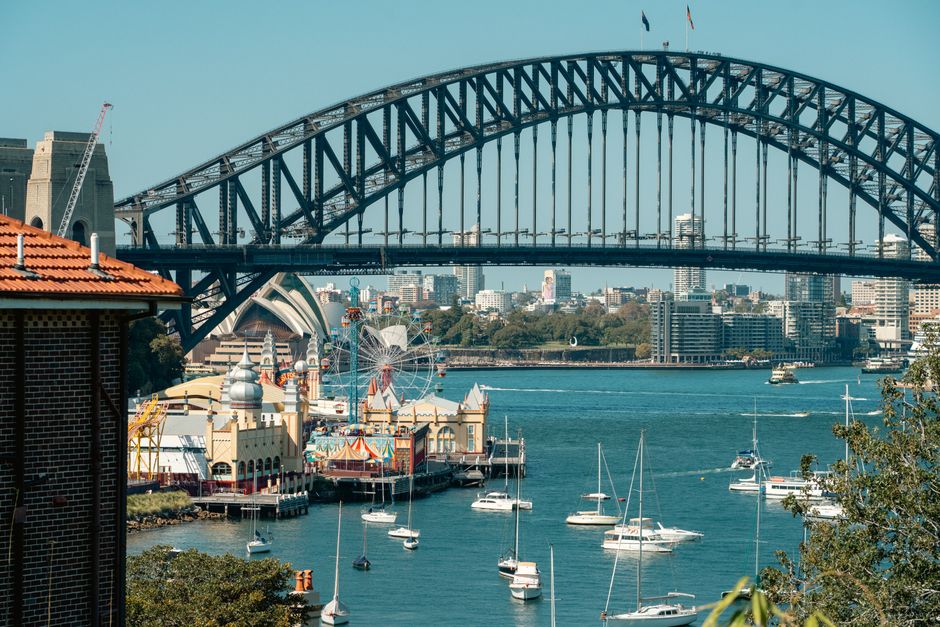
Sydney's housing crisis has a quieter, stranger problem running underneath it: thousands of rental and sales listings published each year carry photographs that are duplicated, digitally altered, or lifted entirely from other properties. The issue has been building since at least 2019, when reverse-image search tools became cheap enough for consumer use, but a reckoning is now arriving, driven by regulatory pressure, a wave of renter complaints, and the mainstreaming of AI image generation tools that made the fraud dramatically easier to commit.
The timing matters. With median Sydney rents sitting at record levels and vacancy rates stubbornly below two percent across most inner-ring suburbs, prospective tenants and buyers have less time and fewer options than at any point in recent memory. When a listing on a major portal carries photos of a sun-drenched Newtown terrace that actually belongs to a property in Parramatta, or worse, to a property that doesn't exist in that form at all, the consequences aren't abstract. People sign leases, transfer holding deposits, and sometimes move across the country based on those images.
The Paper Trail: How the Industry Arrived Here
The mechanics of the problem are relatively straightforward. Real estate photography is expensive, a professional shoot for a two-bedroom apartment in Surry Hills can run between $300 and $600, so some smaller agencies and private landlords began recycling images as far back as 2017. That practice was opportunistic and fairly detectable. What changed between 2022 and 2024 was the arrival of generative AI tools capable of producing photorealistic interior shots at near-zero cost, stripping watermarks, and seamlessly replacing window views or furniture in existing images to misrepresent a property's aspect or condition.
NSW Fair Trading received a rising volume of complaints about misleading property photographs throughout 2024 and into 2025, according to the agency's published annual reports. The Real Estate Institute of New South Wales, which represents agents across the state, updated its professional conduct guidelines in late 2024 to explicitly address digitally manipulated listing images, a belated acknowledgment that the existing Property and Stock Agents Act 2002 hadn't anticipated the specific problem of AI-generated visuals. The institute stopped short of mandating technical verification of images at the point of upload.
The major listing portals, Domain, which is headquartered in Sydney's CBD, and REA Group's realestate.com.au, were slow to deploy systematic duplicate-detection at scale. Both platforms publicly acknowledged they had image-matching tools operating by mid-2023, but consumer advocates at the Tenants' Union of NSW argued those tools were reactive rather than preventive: they caught duplicates after listing publication rather than before. The union, based in Redfern, documented multiple cases in 2024 where the same photograph appeared across listings for properties in Chippendale and Blacktown simultaneously.
What the Regulatory Gap Looks Like on the Ground
The structural problem is jurisdictional. Listing portals are classified as technology platforms, not real estate agents, which means they sit outside the licensing regime administered by NSW Fair Trading. Agents uploading the images are licensed, but the platforms hosting them are not directly liable under the Property and Stock Agents Act for what gets published. That gap, identified in a 2023 review by the NSW Department of Fair Trading, has never been legislatively closed.
Federal law offers some recourse. The Australian Consumer Law prohibits misleading conduct in trade or commerce, and the Australian Competition and Consumer Commission has jurisdiction over online platforms. But the ACCC has not, to date, taken public enforcement action specifically targeting duplicate or AI-manipulated real estate images, meaning the deterrent effect of federal law has been largely theoretical for this category of conduct.
What happens next will likely be shaped by two forces running in parallel. NSW Fair Trading is understood to be consulting on amendments to the Property and Stock Agents Regulation 2022, the subordinate instrument that could be updated without primary legislation, that would impose image-authenticity obligations on licensees. At the same time, both Domain and realestate.com.au face growing pressure from institutional investors and consumer groups to publish transparency reports on image-moderation rates. Renters searching listings today in suburbs like Fairfield or Liverpool should, at minimum, run any interior photographs through a free reverse-image search before transferring any money, and should ask agents in writing to confirm that listing photos represent the current, unaltered condition of the specific property being advertised.