news
How AustralianSuper's Coal U-Turn Happened, and Why Members Were the Last to Know
The fund managing retirement savings for roughly 3.4 million Australians has quietly reintroduced coal exposure to its portfolio, raising hard questions about a net zero commitment that was never as binding as it sounded.
How we reported this
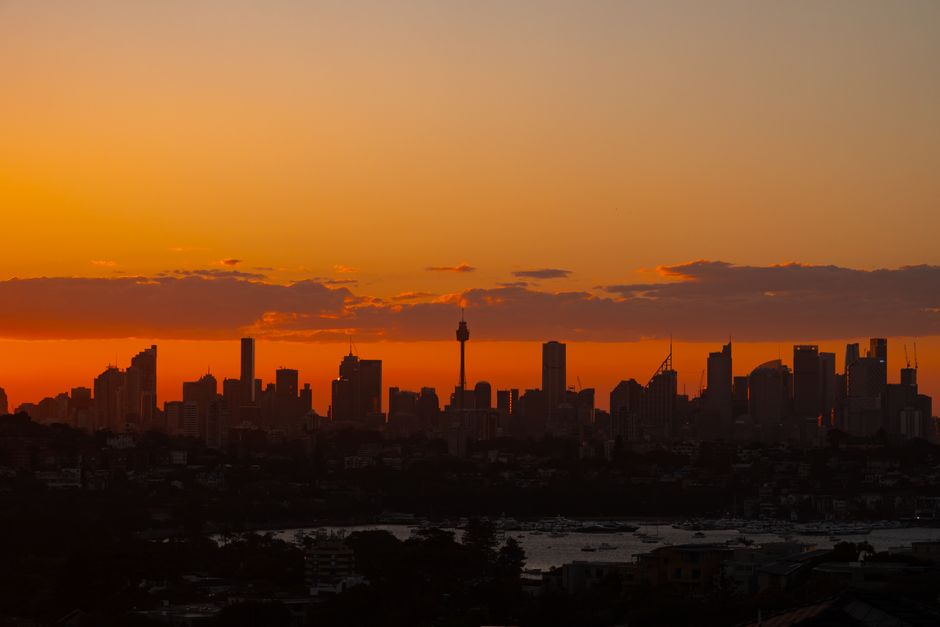
AustralianSuper, the country's largest superannuation fund with more than $300 billion in assets under management, has coal back in its investment portfolio. That much is now confirmed. What remains murky, and what members across Sydney's western suburbs and CBD office towers are increasingly asking, is how the fund reconciles that position with the net zero by 2050 pledge it has used in marketing materials and annual reports for years.
The answer, if you read the fine print, is that it never fully divested. AustralianSuper's climate commitments were framed around engagement and a managed transition, not a hard exclusion policy. That distinction matters enormously, and it is a distinction the fund has not always made prominent.
The Road Back to Black Rock
The backstory runs through a period of intense pressure on institutional investors that began around 2020 and 2021, when ESG mandates were becoming a competitive differentiator for funds trying to attract younger members. AustralianSuper publicly aligned itself with the Paris Agreement goals and joined Climate Action 100+, the global investor coalition that pressures high-emitting companies to change their behaviour. Membership of that coalition is not the same as avoiding fossil fuel stocks, it is explicitly a strategy of staying in and pushing from the inside.
Coal prices then surged after Russia's full-scale invasion of Ukraine in February 2022, rewriting the economics of thermal coal in particular. Metallurgical coal, the kind used in steelmaking, never really fell out of favour with institutional investors the way thermal coal did. The practical distinction between the two has always been easy for funds to exploit when defending their holdings. Critics, including climate advocacy groups such as Market Forces, based in Melbourne, have argued for years that this line is drawn deliberately to protect profitable positions.
By late 2024, AustralianSuper's own portfolio disclosures showed residual exposure to companies with significant coal operations. The fund's position: those holdings sit within diversified mandates and are subject to ongoing engagement. Its members, including teachers, healthcare workers, and construction crews building the Metro West tunnel under Parramatta Road, received no direct notification of what the portfolio review process had concluded.
What This Means for Sydney's Super Members
Sydney concentration matters here. AustralianSuper has its NSW headquarters at 130 Loftus Street in the CBD, a short walk from Circular Quay. A significant share of the fund's member base works in the public sector and healthcare, industries heavily represented in suburbs like Westmead, Camperdown, and Blacktown, where WorkCover and NSW Health employee counts are among the highest in the state. These are workers whose retirement savings are now, at least in part, exposed to coal assets they may have assumed were being wound down.
The NSW Labor government has its own climate obligations under the state's Net Zero Plan, which targets a 70 percent reduction in emissions from 2005 levels by 2035. That policy creates a certain political awkwardness when one of the state's most prominent financial institutions, drawing members from the public sector Labor counts on, is holding coal exposure in a year the government is supposed to be accelerating renewable infrastructure.
For members who want to avoid fossil fuel exposure entirely, AustralianSuper does offer an option: its Socially Aware investment option, which applies exclusion screens. The default Balanced option does not carry those screens. The critical detail is that the vast majority of members, estimated at well over 80 percent by industry analysts, sit in the default Balanced option and have never made an active choice to be there.
What happens next depends partly on member pressure and partly on regulatory direction. The Australian Securities and Investments Commission has been sharpening its scrutiny of greenwashing since at least 2023, and any fund that has made net zero commitments it cannot operationally defend faces genuine legal exposure. Members who want clarity on where their money sits should contact AustralianSuper directly, check the fund's latest portfolio holdings disclosure on its website, and consider whether switching to the Socially Aware option aligns with their actual risk and values profile, before the next annual report lands without an explanation.