property
The Gap Widens: Sydney's House-Unit Price Divergence Is Reshaping Who Gets In and Where
With Sydney's median house price sitting around $1.4 million and units trailing by hundreds of thousands, buyers and investors are being forced to make fundamentally different bets on the city's future.
How we reported this
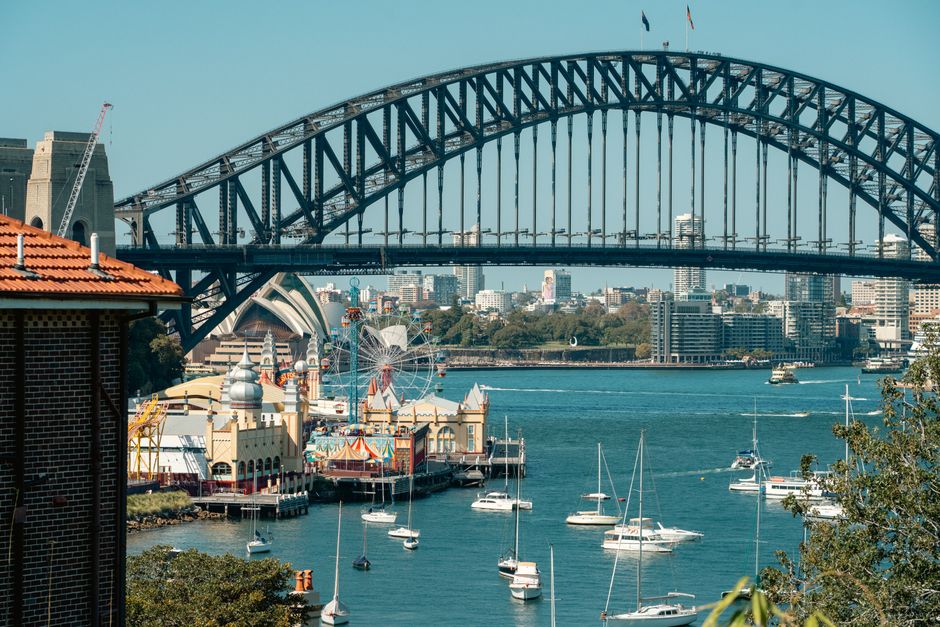
Sydney's property market is splitting in two. Houses and units are no longer moving in lockstep, the price gap between them has stretched to a level that is rewriting affordability calculus for first-home buyers, upsizing families, and yield-chasing investors alike. The divergence is most visible in the inner ring, where a freestanding home on even a modest block now commands a premium that puts it in a different asset class entirely from the apartment next door.
This matters right now because the gap is widening at exactly the moment when borrowing capacity has become the binding constraint for most Sydney buyers. The Reserve Bank's rate cycle has left monthly repayments elevated, and with NSW's median house price sitting at approximately $1.4 million, the jump from a $750,000 unit to a comparable house in the same suburb can require an additional $300,000 to $400,000 in equity or borrowing. For buyers who stretched to enter the market via an apartment two or three years ago, that crossing-over point is receding rather than approaching.
Where the Divergence Bites Hardest
The Inner West and Northern Beaches are the sharpest illustrations. In Marrickville, a two-bedroom terrace on a street like Illawarra Road regularly clears $1.6 million at weekend auctions, while a comparable two-bedroom apartment in the same suburb trades in the $750,000 to $900,000 range. The ratio, roughly two-to-one, has widened from closer to 1.6-to-one three years ago. On the Northern Beaches, the Manly-Dee Why corridor tells a similar story: houses on the low side of Pittwater Road are chasing $2.5 million and beyond, while units in the same postcode sit well under $1.2 million.
The supply picture is doing a lot of work here. Inner-ring Sydney has essentially exhausted its land for new detached housing. The pipeline of approved apartment projects, many under the NSW Government's Transport Oriented Development program, which targets higher density within 400 metres of train stations, is concentrated in unit stock. Places like Homebush, Macquarie Park, and Bella Vista are absorbing most of the new dwelling approvals. That steady trickle of new apartments keeps a ceiling on unit price growth even as house supply stays constrained. Auction clearance rates across Greater Sydney have been holding in the 65 to 72 per cent range, but agents working house listings in suburbs like Rozelle or Balmain report competition at levels that suggest that band understates demand for detached stock specifically.
What Buyers and Investors Should Take From This
The divergence creates a fork in strategy. For owner-occupiers, units have become the default entry point, and increasingly the permanent one rather than a stepping stone. Domain and CoreLogic data covering the past 12 months shows Sydney unit values appreciating at a slower rate than houses over the same period, meaning the equity escalator that once helped buyers bridge the gap is running more slowly for apartment owners. First-home buyers using the NSW First Home Buyer Assistance Scheme, which provides stamp duty concessions on purchases up to $800,000, are almost entirely channelled into the unit market by that price ceiling, which reinforces the dynamic.
Investors are reading the same data differently. Rental yields on Sydney units have improved relative to houses as rental demand, driven heavily by overseas migration and international students returning to campuses near Ultimo and Kensington, pushes rents up faster on the more affordable end of the market. A $750,000 unit yielding 4.2 per cent is a different conversation from a $1.5 million house yielding 2.4 per cent. The risk, of course, is the oversupply question that shadows the apartment pipeline in station precincts.
The practical read for anyone watching the market this winter: if you are buying a house in the inner ring, expect competition to remain intense regardless of broader sentiment readings, because there is almost no new supply coming. If you are buying a unit, the calculus is more nuanced, location relative to employment nodes and rental demand matters more than ever, and not all apartment markets are moving the same way. The gap between these two asset classes is unlikely to close on its own.
This article is general information only and is not personal financial or investment advice. Consider your own circumstances and seek licensed professional advice before making financial decisions.