property
Going Once, Going Twice: How to Build a Winning Bid Strategy at Sydney Auctions
With clearance rates holding above 65 percent and the median Sydney price sitting near $1.4 million, walking into an auction without a plan is the fastest way to lose.
How we reported this
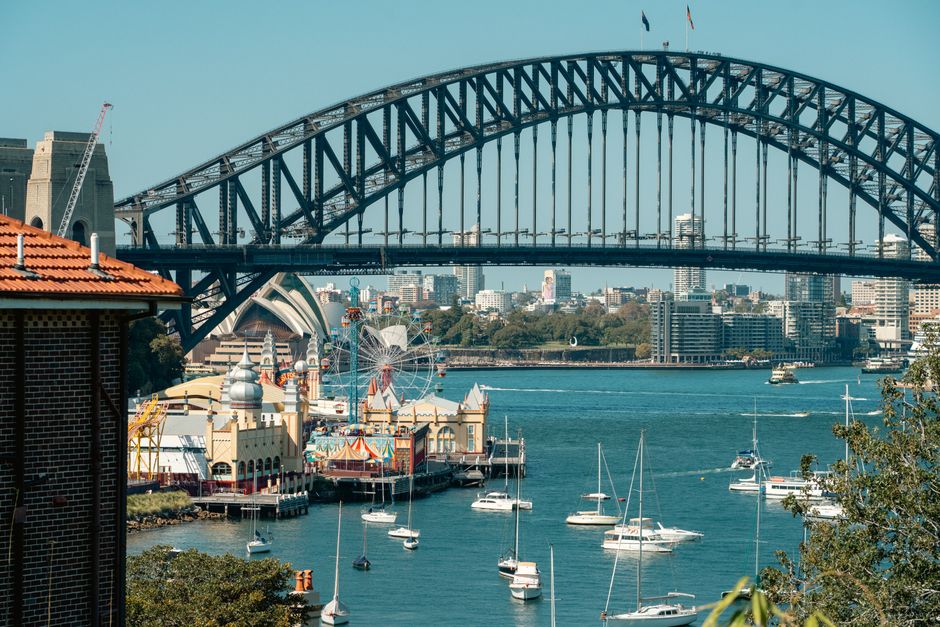
Sydney's auction floor is unforgiving. Clearance rates across the city have been tracking between 65 and 72 percent through the first half of 2026, which means roughly one in three properties is still passing in, but for the properties that do sell, competition is fierce, bidding is fast, and the unprepared buyer consistently goes home empty-handed. Understanding the mechanics of a Sydney auction before you set foot on the lawn at Glebe or raise your hand on a Mosman street is no longer optional. It's the price of entry.
The context matters. Melbourne's auction market has been struggling through its worst winter opening on record, which is pushing more interstate investors and upgraders to look north. Sydney's inner ring, the suburbs within roughly 10 kilometres of the CBD, from Newtown through Balmain to Crows Nest, continues to absorb that demand against a supply pipeline that remains stubbornly thin. Add strong migration demand concentrated in established infrastructure corridors and you have a market where a well-run Saturday morning auction on Darling Street, Rozelle can draw eight registered bidders for a three-bedroom terrace. One bid strategy fits none of them.
Know Your Number Before the Auctioneer Opens the Books
Start with a hard ceiling, not a range. Buyers who arrive thinking they'll go to "about $1.5 million, maybe a bit more" routinely find themselves at $1.62 million fifteen minutes later, regretting every incremental counter-bid they matched in the heat of the moment. Financial advisers and buyer's agents working the Northern Beaches and Inner West consistently recommend setting the absolute limit three to five days before auction day, not the morning of, so emotion doesn't corrupt the number at the kerb.
Register early and inspect the Section 32, or in NSW terms, the Contract for Sale, before the auction. Solicitors on Crown Street, Surry Hills and around the Parramatta legal district typically offer same-week turnaround reviews of auction contracts for between $400 and $700. That cost is trivial against a $1.4 million purchase where an undisclosed easement or a problem strata levy schedule can cost multiples more. The contract review also tells you whether the vendor has set a realistic reserve or is fishing.
The first bid is a statement. Opening with a strong, round number, say $1.35 million rather than $1.31 million, signals conviction and can psychologically unsettle less-prepared competitors. Auctioneers working the Domain and Ray White circuits in the Eastern Suburbs and Lower North Shore have long noted that hesitant, incremental early bids tend to encourage more bidders to enter the room. A bold opener narrows the field faster.
Reading the Room: When to Push and When to Hold
Watch the auctioneer's body language and the vendor's representative, who is usually standing near the front door or at the side of the crowd. If the property is called on the market, meaning the reserve has been met, that's when disciplined bidders switch strategy. Before that call, modest increments are fine. After it, consider jumping the increment to end the auction on your terms rather than theirs.
Engaging a buyer's agent changes the calculus significantly. Services such as those offered by firms registered with the Real Estate Buyers Agents Association of Australia (REBAA) provide both pre-auction due diligence and live bidding representation. For a property in the $1.2 million to $1.8 million band, the dense middle of Sydney's current market, a buyer's agent fee typically runs between one and two percent of the purchase price. For buyers who have lost three or four auctions already, that cost is often recouped in the discipline alone.
Finally, have your 10 percent deposit accessible in a form the vendor's solicitor will accept on the day, typically a bank cheque or cleared funds ready for electronic transfer. Several Inner West auctions in the first quarter of 2026 saw winning bidders unable to exchange immediately due to deposit logistics, creating unnecessary risk and, in at least the anecdotal experience reported by local agents, some vendor hesitation. Preparation at that final administrative stage is as important as everything that came before the first bid.
This article is general information only and is not personal financial or investment advice. Consider your own circumstances and seek licensed professional advice before making financial decisions.