How Global Instability Is Reshaping Sydney's Office Market
Geopolitical tensions and shifting trade dynamics are forcing local commercial property players to rethink their strategies for the city's CBD and emerging precincts.
Geopolitical tensions and shifting trade dynamics are forcing local commercial property players to rethink their strategies for the city's CBD and emerging precincts.
Sydney's commercial property market is experiencing a subtle but significant realignment as global instability reverberates through local investment decisions and tenant behaviour. Recent geopolitical tensions across the Middle East, ongoing trade uncertainties, and shifts in international supply chains are forcing property investors and corporate occupiers to reassess their Sydney footprint—with direct consequences for the city's CBD and emerging office hubs.
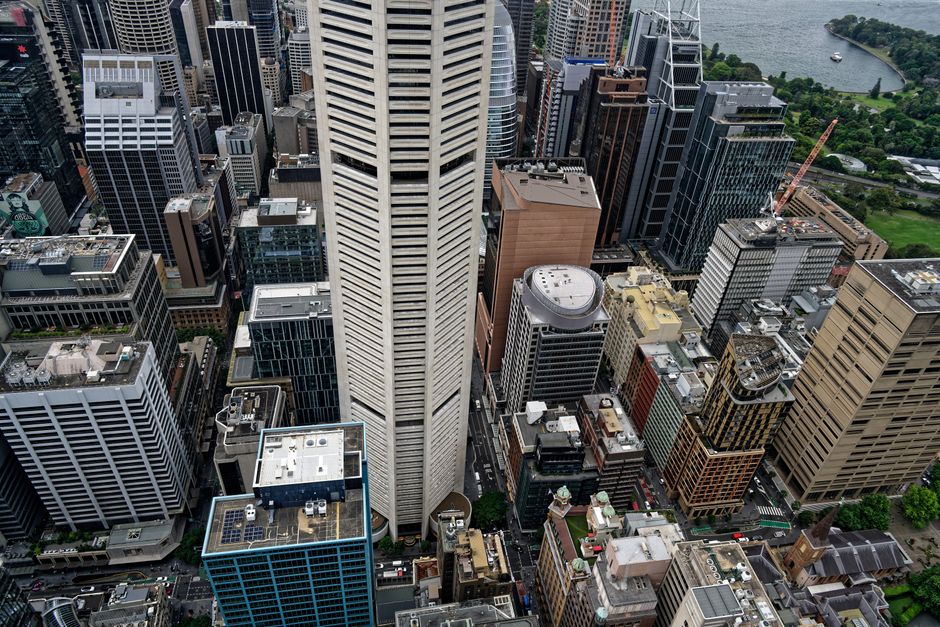
The impact is most visible in how multinational corporations are rethinking their presence in traditional precincts. Downtown Sydney—particularly around Pitt Street and Martin Place—has historically commanded premium rents driven by demand from global financial services firms. However, market data suggests these companies are increasingly scrutinising their office space requirements. Some are consolidating operations or shifting portions of their teams to regional hubs like Parramatta, where lower occupancy costs and improved connectivity offer financial relief amid broader economic uncertainty.
"We're seeing flight to quality, but also flight to flexibility," says the commercial property sector locally, with investors preferring modern, purpose-built spaces that can accommodate hybrid work models—a trend accelerated by the unpredictability of international travel and supply chain disruptions. Colocation spaces and flexible office providers have gained traction across Barangaroo and Ultimo as companies hedge their bets on long-term real estate commitments.
The uncertainty is also reshaping capital flows. Foreign investment—traditionally a cornerstone of Sydney's commercial property market—is becoming more selective. Investors from Europe and North America are pulling back amid domestic economic pressures, while Asian capital remains active but increasingly cautious. This has created pockets of opportunity for domestic investors willing to acquire well-positioned assets at more attractive valuations than the pre-2024 peak.
Tenant demand remains resilient in absolute terms, but the composition is shifting. Professional services, technology, and media companies continue to seek Grade-A space, though with shorter lease terms and more aggressive rent negotiations. Meanwhile, some traditional corporate tenants are reconsidering their CBD commitments entirely, preferring the accessibility and cost efficiency of outer precincts like Alexandria and Redfern.
For Sydney's commercial property sector, the message is clear: global headwinds demand local agility. Those investors and developers who can pivot toward adaptable, resilient assets—and those prepared to serve the growing demand in emerging precincts beyond the traditional CBD—are likely to outperform as the market continues its gradual recalibration. The days of assuming steady-state demand from multinational corporates are firmly behind us.
This article was compiled by AI from the sources linked above and screened before publishing. See our editorial standards.
How does this story make you feel?
Spread the word
About this article
Published by The Daily Sydney
Daily brief
Free, in your inbox before 7am. Weekdays.
More in Business