Sydney's Hidden Stories: What Visitors Really Need to Know About the City's Cultural Identity
Beyond the Opera House and Harbour Bridge, the real Sydney lives in its neighbourhoods, museums and street-level history—here's where to find it.
Beyond the Opera House and Harbour Bridge, the real Sydney lives in its neighbourhoods, museums and street-level history—here's where to find it.
Sydney's tourism machine cranks out the same postcard views year after year: the Opera House at sunset, the Harbour Bridge climb, Bondi Beach. But the city's actual cultural identity—the thing that makes it worth knowing—sits in the spaces between these blockbuster attractions, waiting for visitors willing to do the work.
The shift is already visible in how the city talks about itself. The Barangaroo Reserve precinct has become less about luxury apartments and more about acknowledging the Eora and Darug peoples whose country it sits on. The Art Gallery of NSW's recent expansions have elevated Indigenous artists and works by women historically sidelined. And organisations like the Powerhouse Museum in Ultimo have started asking harder questions: Who gets to tell Sydney's story? And who's been left out?
This matters now because Sydney is reckoning with being a global city built on a First Nations foundation it spent 230 years ignoring. That reckoning shapes everything—from what you'll see in galleries to what plaques on street corners actually say.
Start at the Royal Australian Museum on William Street in the city. The permanent exhibition "Dioramas" runs through September and sits in an older wing where the building's classical architecture still dominates. But alongside the taxidermy and bones sits a parallel narrative: objects and stories from Yolngu, Martu, and other Aboriginal peoples that challenge the museum's own colonial collecting history. It costs $15 for adults; many Sydney locals have never been inside.
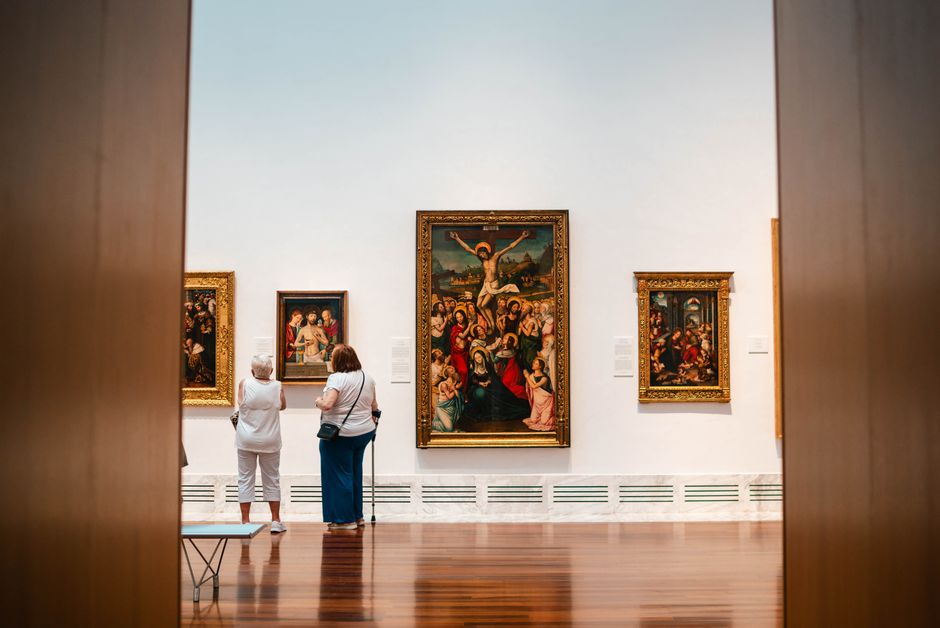
Walk east toward the Domain. The Art Gallery of NSW sits at Art Gallery Road in The Domain—a space that looks Grecian and orderly but was never orderly at all. The gallery's $344 million expansion, which opened in December 2022, added 11,000 square metres. The curatorial choices matter more than the square footage. The ground-level galleries now feature Indigenous Australian artists as primary voices, not supplementary ones. Recent shows have centred work by Rover Thomas and Emily Kame Kngwarreye without the usual framing that treats their practice as emerging or novel.
Head to Ultimo after. The Powerhouse Museum sits at 500 Harris Street and operates quite differently from traditional heritage spaces. Rather than venerating objects, curators ask what power structures created them. A recent exhibition on Sydney's water history didn't just celebrate the engineering—it examined whose voices were erased when the city built its dams and pipelines, and whose land flooded to make it work.
Sydney's visitor economy brought in roughly $15 billion in visitor spending in 2024, according to Destination NSW figures. Yet the vast majority of those dollars concentrate in five precincts: Circular Quay, Darling Harbour, the Blue Mountains day-trip corridor, Bondi to Coogee, and the Rocks. The neighbourhoods that contain Sydney's actual cultural character—Glebe, Newtown, Marrickville, Redfern—remain relatively underdiscovered by international visitors.
That's changing. Walking tours focused on Aboriginal history and colonial resistance have doubled bookings in the past three years. Heritage listings for buildings on Pitt Street and George Street increasingly include the names of the people who actually built them, often via convict or indentured labour. The Sydney Heritage Fleet, which operates wooden vessels on the Parramatta River, has started doing tours that acknowledge the river was central to Darug Country before it became an industrial corridor.
What visitors should actually know: spend less time queuing for the Opera House and more time in Barangaroo Reserve learning to read the country properly. Visit the Chau Chak Wing Museum at the University of Sydney campus in Camperdown (entry free, but donations encouraged)—it's opened up entire collections on Chinese-Australian history that were previously invisible in the city's public narrative. Walk Redfern and Waterloo, suburbs that contain Aboriginal heritage sites and the history of Black Power activism in Australia.
The next generation of Sydney tourism won't be about ticking off famous sites. It'll be about understanding why the city looks the way it does, and whose stories shaped it. That work takes longer than an afternoon, and it's vastly more interesting.
How does this story make you feel?
Spread the word
About this article
Published by The Daily Sydney
Daily brief
Free, in your inbox before 7am. Weekdays.
More in culture