Inner West cycling is booming—but Sydney's bike lanes are struggling to keep pace
As more commuters ditch cars for two wheels, Marrickville and Newtown are buckling under the strain of aging infrastructure.
As more commuters ditch cars for two wheels, Marrickville and Newtown are buckling under the strain of aging infrastructure.
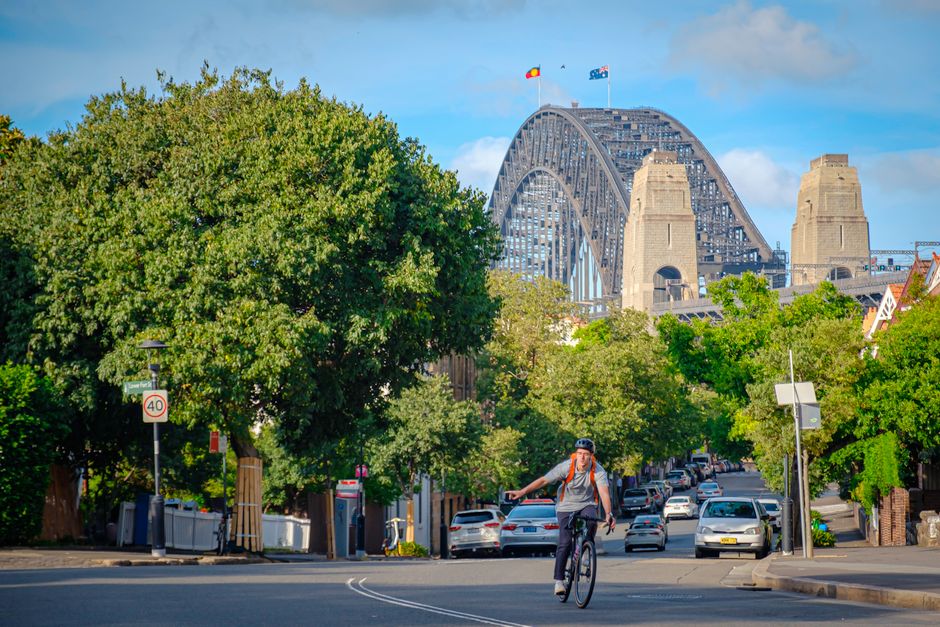
Marrickville's King Street has become a testing ground for Sydney's cycling future, and it's showing cracks. The painted bike lane that runs alongside the heritage terraces and Vietnamese restaurants has become so crowded during peak hours that cyclists regularly spill into traffic or dismount onto footpaths. Local commuters say the lane's 1.2-metre width—designed a decade ago when far fewer people rode to work—now feels like navigating a corridor designed for ghosts.
Sydney's inner west is grappling with a commuting revolution. Two years of property price stagnation and $150-a-week petrol costs have pushed thousands of workers onto bicycles. But the cycling boom has exposed the disconnect between what Sydney's transport planners imagined and what's actually happening on the ground. The infrastructure isn't there. The coordination between councils is fractured. And unlike Melbourne, which overhauled its bike network with $150 million in dedicated funding five years ago, Sydney has lurched forward without a coherent strategy.
Tom Whitmore, who pedals from his Marrickville apartment to an office in Barangaroo five days a week, used to drive. "I sold the car in 2024," he says. "But some days I genuinely consider buying another one because the bike lanes feel like they're actively getting worse, not better." His route takes him through the chaos of Marrickville, along the Cooks River shared path toward the CBD—a journey that takes 35 minutes by bicycle but requires constant vigilance where infrastructure simply stops.
The numbers tell a stark story. Transport NSW data from 2025 shows cycling trips across greater Sydney increased 43 per cent in 12 months. In the inner west, the spike was steeper. Newtown's commercial precinct on King Street now records peak-hour cyclist volumes that council engineers say were forecast for 2030. The Cooks River shared path, which connects Marrickville to inner-city employment hubs, has become a bottleneck. During rush hours between 7:30am and 9am, it's congested enough that the Australian Cycling Alliance flagged safety concerns to Inner West Council in March.
Inner West Council has earmarked $8.2 million for cycling infrastructure over the next three years. It's a start. But cycling advocates point out that Melbourne spent more than that in a single year on its network overhaul. Sydney's fragmented approach—where Inner West Council handles some lanes, Marrickville gets its own budget allocation, and state-level projects operate independently—means gaps persist. A cyclist heading from Marrickville to Surry Hills can find themselves pedalling on pristine new asphalt one moment and unprotected road the next.
The political push is building. Inner West councillor Patricia Mahoney has called for accelerated funding for the Marrickville to Dulwich Hill corridor, flagging it as a key commuting artery. Meanwhile, the state government's Towards Zero strategy, released in 2025, includes $45 million for cycling safety across NSW, though only $8 million has been allocated to the greater Sydney region so far.
For commuters like Whitmore, the answer isn't complicated: build proper infrastructure before cyclists become targets. The narrow painted lanes on King Street don't separate riders from parked cars or turning traffic. At Newtown station, bicycle parking is chronically insufficient—there are roughly 40 spaces for what appears to be 200-plus daily riders. Inner West Council approved a new 120-space bike hub at Newtown in April, but construction hasn't started.
The reality is that Sydney's transport planners grossly underestimated the appetite for cycling. Property values in Marrickville and Newtown have stalled precisely because workers are reconsidering their commuting calculus. A one-bedroom apartment in Marrickville that cost $650,000 in 2023 was listed at $595,000 six months ago. Cheaper housing plus a bikeable location has converted thousands into two-wheeled commuters almost overnight.
The next 12 months matter. Inner West Council is preparing a comprehensive cycling strategy due for public exhibition later this year. If it's properly funded and coordinated with adjacent councils—notably Ryde, Canada Bay, and Strathfield—the inner west's bike lanes could finally match demand. If not, expect more cyclists doing what Whitmore threatens: going back to cars, or simply accepting the daily risk as the price of avoiding $150 weekly fuel costs.
How does this story make you feel?
Spread the word
About this article
Published by The Daily Sydney
Daily brief
Free, in your inbox before 7am. Weekdays.
More in lifestyle