The Numbers Behind Western Sydney's Community Boom: What Data Reveals About Neighbourhood Change
New census and council figures show how rapidly suburbs like Penrith, Parramatta and Blacktown are reshaping themselves—and what it means for locals.
New census and council figures show how rapidly suburbs like Penrith, Parramatta and Blacktown are reshaping themselves—and what it means for locals.
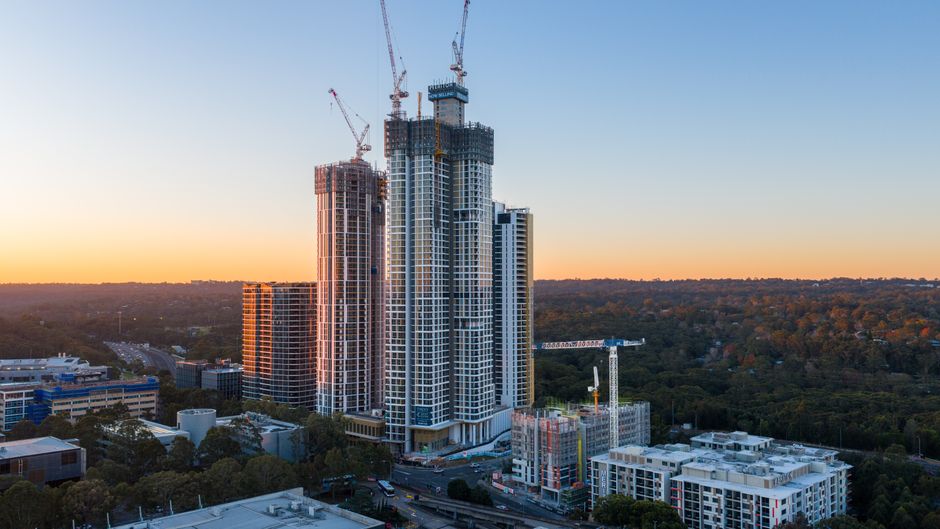
When the Australian Bureau of Statistics released its latest population figures this year, Western Sydney told a story of unprecedented growth. The Penrith Local Government Area has swelled by 12.4 per cent since 2021, adding approximately 28,000 residents. Parramatta's population now exceeds 240,000—making it larger than some Australian capital cities—while Blacktown Council's jurisdiction hosts nearly 390,000 people across its sprawling boundaries.
But raw numbers alone mask the deeper changes reshaping these neighbourhoods. Data from NSW Department of Planning reveals that planning approvals for residential development in Western Sydney jumped 34 per cent year-on-year through 2025, with the majority concentrated around metro stations and town centres. Along Church Street in Parramatta and around Penrith's CBD, mixed-use developments now comprise 67 per cent of new approvals versus just 41 per cent five years ago.
Housing affordability remains the defining context. The median house price in Penrith reached $1.24 million in Q2 2026—a 23 per cent increase since 2023—while Blacktown's median of $987,000 reflects similar pressures. Yet rental data tells a different story: three-bedroom houses in suburbs like Werrington and Glendenning still rent for $380–$420 weekly, drawing families priced out of inner Sydney.
Community infrastructure is playing catch-up. Blacktown City Council's latest Recreation Needs Assessment identified a 31 per cent shortfall in public open space relative to population targets, with only 2.1 hectares per 1,000 residents against the recommended 3.2 hectares. Meanwhile, participation in council-run community programs across Western Sydney increased 41 per cent post-Metro West announcements, suggesting residents are investing emotionally in their changing localities.
The Metro West itself will fundamentally alter these statistics. When it opens in 2028, modelling predicts employment nodes around Parramatta and Westmead stations will capture an additional 47,000 jobs. Current traffic data shows commute times from Penrith to the CBD average 58 minutes by car; planners project rail will reduce this to 41 minutes.
Diversity metrics underscore Western Sydney's character. In Parramatta, 72 per cent of residents were born overseas—the highest proportion in NSW. Language data shows Mandarin, Arabic, and Vietnamese are spoken in 31 per cent of households across the broader region.
These figures represent more than abstract statistics. They chart how suburbs are transforming, where families are choosing to settle, and what infrastructure communities actually need. For Western Sydney, the data suggests rapid urbanisation alongside persistent affordability pressures—a neighbourhood story playing out across dozens of postcodes.
This article was compiled by AI and screened before publishing. See our editorial standards.
How does this story make you feel?
Spread the word
About this article
Published by The Daily Sydney
Daily brief
Free, in your inbox before 7am. Weekdays.
More in News


