Sydney Real Estate Platforms Crack Down on Misleading Duplicate Property Photos
As misleading duplicate photos flood real estate platforms, buyers, agents and regulators face a reckoning over who fixes the problem and how fast.
As misleading duplicate photos flood real estate platforms, buyers, agents and regulators face a reckoning over who fixes the problem and how fast.
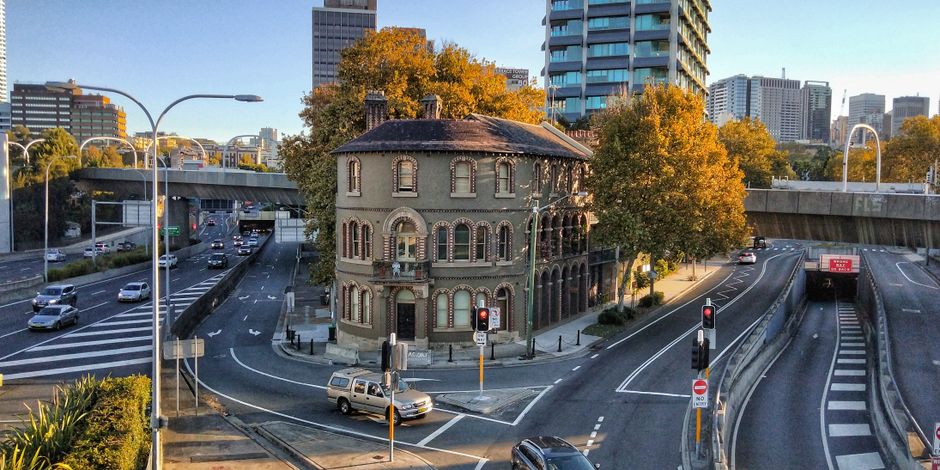
Sydney's property market has a visibility problem. Duplicate images — the same stock photo, recycled render or reused interior shot appearing across multiple, entirely different listings — have become common enough that consumer advocates and real estate industry bodies are now under pressure to act. The question is no longer whether the practice is misleading. It is who moves first to stop it.
The issue lands at a particularly fraught moment. Sydney's median house price remains above $1.4 million, according to CoreLogic's most recent quarterly figures, and buyers are making high-stakes decisions on the basis of digital listings before setting foot in a suburb. When a photograph of a kitchen in Parramatta turns up attached to a property in Penrith, or a rooftop terrace render is recycled from one Surry Hills development to promote another, the practical harm is real: inspections are wasted, expectations are distorted, and in some cases deposits are placed on properties that bear little resemblance to what was advertised.
Fair Trading NSW administers the Property and Stock Agents Act 2002, which sets conduct standards for licensed real estate agents across the state. The Act prohibits misleading representations in property advertising, but enforcement against duplicate imagery specifically has been sparse. NSW Fair Trading does not publish a granular breakdown of complaints by category, which makes it difficult to gauge how frequently duplicate image complaints are lodged versus how often they result in formal action.
The major listing platforms — Domain, headquartered in Sydney's CBD, and REA Group, which operates realestate.com.au — both have terms of service prohibiting deceptive listings. Domain's listing standards documentation, available on its website, states that images must accurately represent the property being sold or leased. Neither platform has announced a dedicated automated detection program for duplicate imagery in the Sydney market, though both have invested in AI-driven listing quality tools in recent years. The gap between policy and enforcement is where the problem lives.
The Real Estate Institute of NSW, based on Clarence Street in the city, is the peak body for agents and has previously called on members to uphold advertising accuracy standards. Industry self-regulation has its limits, however, particularly in a market where listing speed and visual appeal are competitive advantages that some operators exploit.
Consumer advocates recommend a straightforward first step: reverse image search every photograph in a listing before booking an inspection. Google Lens and TinEye both allow users to check whether a given image appears elsewhere online. For renters chasing the comparatively thin vacancy rate — SQM Research recorded Sydney's rental vacancy rate at around 1.6 per cent in May 2026 — the pressure to act fast on a listing is intense, which is exactly the condition under which duplicate imagery causes the most damage.
Tenants Union NSW, which operates from Redfern, advises prospective renters to request a video walkthrough conducted live via FaceTime or similar before paying a holding deposit on any property they have not physically inspected. That guidance applies with equal force to buyers in off-the-plan developments, where render-based marketing is standard and the finished product can diverge significantly from the advertised images.
The decisions ahead are sequential. Fair Trading NSW will need to determine whether existing powers under the Property and Stock Agents Act are sufficient to compel platforms and agents to audit their image libraries, or whether new specific guidance is required. The listing platforms face a product decision: build or license duplicate-detection tools and apply them systematically to Sydney listings, which number in the tens of thousands at any given moment. And the Real Estate Institute of NSW will be pressed to clarify whether its code of conduct explicitly addresses recycled imagery, not just inaccurate descriptions.
July's state Labor conference, where Premier Chris Minns has framed housing as a central battleground, may generate additional political pressure on the government to tighten property advertising rules. For now, the most consequential protection available to anyone searching on Domain or realestate.com.au this weekend is a thirty-second reverse image search before picking up the phone.
How does this story make you feel?
Spread the word
About this article
Published by The Daily Sydney
Daily brief
Free, in your inbox before 7am. Weekdays.
More in News