The Hidden Numbers Behind Sydney's Duplicate Image Problem
Councils, real estate platforms and cultural institutions are quietly grappling with millions of redundant digital files — and the cleanup bill is steeper than most expect.
Councils, real estate platforms and cultural institutions are quietly grappling with millions of redundant digital files — and the cleanup bill is steeper than most expect.
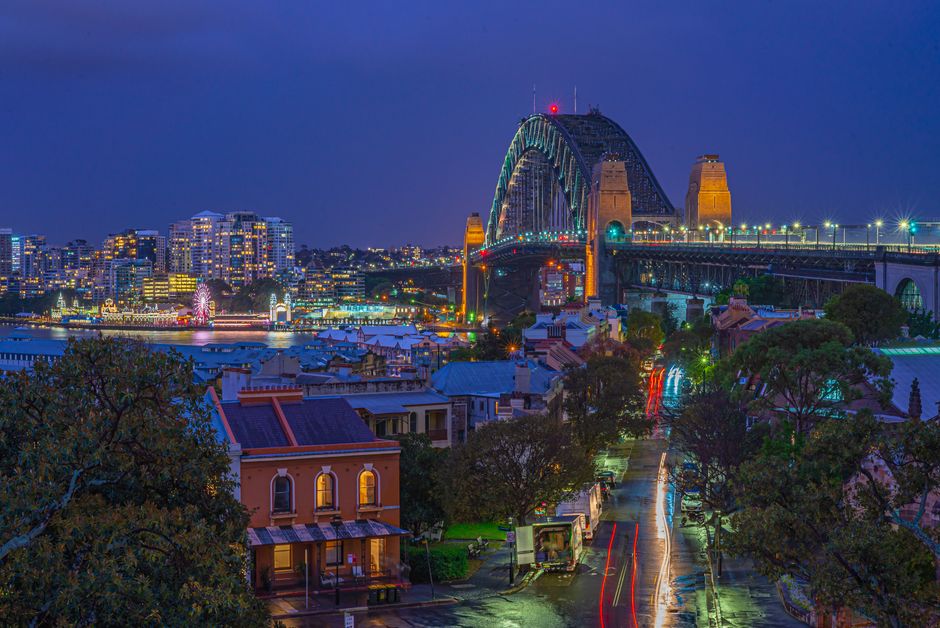
Sydney's public and private sector organisations are sitting on an estimated tens of millions of duplicate digital image files, a sprawling data hygiene problem that costs storage budgets, slows workflows and, in the property and heritage sectors, actively distorts public records. The scale only became visible as institutions began auditing their digital asset libraries in earnest from 2024 onward.
The timing matters. NSW's housing crisis has pushed residential listings to record volumes on platforms such as Domain and REA Group's realestate.com.au, both of which operate significant technical infrastructure out of Sydney. Each new listing typically generates multiple image exports — thumbnail, full-size, watermarked and compressed variants. Multiply that across hundreds of thousands of active listings and you get a duplication rate that, according to digital asset management practitioners, can exceed 60 per cent of total stored files in large property databases.
The City of Sydney Council alone manages a digital archive that spans historical photographs, planning documents and event imagery stretching back decades. Practitioners in the records management sector say large metropolitan councils typically hold between 800,000 and 2 million image files, with duplication rates ranging from 30 to 45 per cent depending on how long the archive has grown unchecked. The State Library of New South Wales on Macquarie Street has publicly documented its own multi-year digitisation project, which by its 2025 milestones had processed more than 500,000 photographic items — a scale at which even a 10 per cent duplication rate translates into 50,000 redundant files consuming server space and degrading search results.
Cloud storage pricing adds concrete urgency. Amazon Web Services S3 standard storage, widely used by Australian media and government agencies, costs roughly AU$0.025 per gigabyte per month in the Sydney ap-southeast-2 region. A single uncompressed high-resolution image from a modern DSLR or drone — the standard tool for Western Sydney development site documentation — runs between 20 and 50 megabytes. An archive carrying 200,000 unnecessary duplicates at an average 30 MB each represents 6 terabytes of waste, or roughly $1,800 a month in pure storage costs before bandwidth, backup redundancy or staff retrieval time are counted.
The Western Sydney Planning Partnership, which coordinates master-planning across councils including Blacktown, Penrith and the Aerotropolis precinct near Badgerys Creek, relies on georeferenced aerial photography updated at regular intervals. Each survey flight generates overlapping image sets that require deduplication before they enter the official record. Project management firms working on Metro West — the $25 billion rail line connecting the CBD to Westmead — face analogous problems with construction progress photography, where site photographers may shoot 500 images a day across stations including Hunter Street in the city and the Parramatta end of the corridor.
Perceptual hashing, the dominant algorithmic technique for identifying near-identical images even when file sizes or metadata differ, has matured significantly since 2022. Tools built on it can process roughly 10,000 images per minute on mid-grade server hardware, meaning a 2-million-file archive can be scanned for duplicates in under four hours. Several Sydney-based digital agencies operating out of Surry Hills and Pyrmont now offer this as a managed service, typically priced between $3,500 and $12,000 depending on archive size and the degree of human review required for edge cases.
For newsrooms and media organisations — including those archiving coverage of events at venues from the Sydney Cricket Ground to Carriageworks in Eveleigh — the practical advice from records specialists is to implement deduplication at the point of ingest rather than waiting for a retrospective audit. Retrospective cleanups on archives older than five years consistently take three to four times longer and cost proportionally more because metadata is incomplete and version histories are tangled.
For councils and state agencies sitting on legacy archives, the NSW Government's Digital.NSW framework includes guidance on digital asset governance, and the 2025-26 budget cycle is when several agencies have flagged remediation projects. Organisations that defer much beyond mid-2027 risk compounding the problem as AI-generated imagery enters public sector workflows in larger volumes, making hash-based detection alone insufficient and requiring more expensive classification layers on top.
How does this story make you feel?
Spread the word
About this article
Published by The Daily Sydney
Daily brief
Free, in your inbox before 7am. Weekdays.
More in News