Sydney's Councils Waste Millions on Duplicate Digital Images, Data Shows
Councils, agencies and property platforms across Sydney are sitting on millions of redundant image files — and the data shows the cleanup bill is climbing fast.
Councils, agencies and property platforms across Sydney are sitting on millions of redundant image files — and the data shows the cleanup bill is climbing fast.
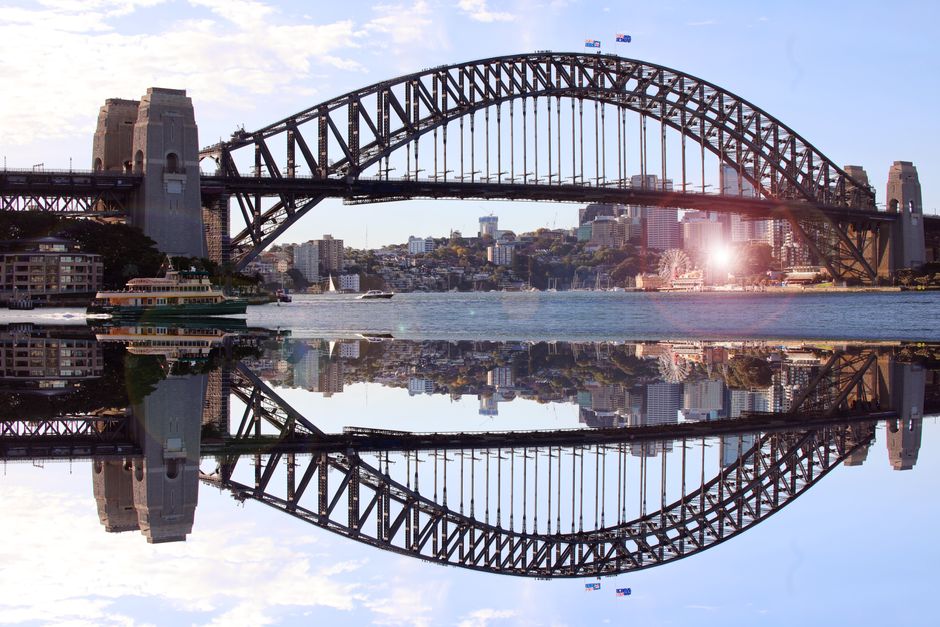
Sydney's public agencies, real estate platforms and media organisations collectively hold an estimated tens of millions of duplicate digital image files, a problem that has grown quietly alongside the city's construction and property boom and is now forcing IT departments to confront storage costs that, in some cases, have doubled in three years. The scale of the duplication, and what it costs to fix, is only now being captured in systematic audits.
The timing matters. Western Sydney's rapid expansion — with new precincts around Bradfield City Centre near the Western Sydney International Airport and master-planned communities from Riverstone to Austral — has generated an extraordinary volume of planning documents, development application photographs and heritage imagery. Every DA lodged with councils such as the Blacktown City Council or the Western Sydney Planning Portal generates multiple image attachments, and industry surveys suggest duplication rates inside large government content management systems routinely run above 30 per cent of total stored assets.
Cloud storage pricing gives the problem a hard dollar shape. Standard object storage in the Sydney AWS ap-southeast-2 region currently sits around AUD $0.025 per gigabyte per month. For an organisation storing 500 terabytes — a realistic figure for a mid-size NSW government agency with years of unmanaged uploads — duplicate files at a 30 per cent rate translate to roughly 150 terabytes of redundant data, costing the equivalent of approximately $3,750 every month, or $45,000 a year, for storage that serves no functional purpose.
The NSW Government's own digital records guidance, maintained through State Archives NSW on Macquarie Street, requires agencies to manage information assets under the State Records Act 1998. Despite that framework being nearly three decades old, automated deduplication tooling has only recently been mandated as part of broader digital transformation programs. The NSW Department of Customer Service has flagged image asset hygiene as part of its GovERP rollout, though specific timeline targets have not been publicly confirmed.
Property technology is where the numbers get striking. Domain and REA Group — both with significant Sydney operations — each process hundreds of thousands of residential listing images weekly. Industry-published figures from 2025 put the average Sydney property listing at between 18 and 24 photographs. With Sydney recording more than 95,000 residential sales in the 12 months to March 2026, according to CoreLogic data, the volume of images entering platforms each year reaches into the tens of millions. Duplicate uploads — the same image submitted under a different filename, or re-uploaded after an agent relists a property — are a known friction point that content delivery engineers spend significant engineering hours resolving.
On the council side, the City of Sydney's digital transformation team, based at Town Hall House on George Street, has been running a content audit across its libraries of public event and infrastructure photography since early 2025. The audit covers image archives dating back to at least 2008 and spans assets originally ingested through at least four separate content management systems. The council has not released deduplication figures publicly, but procurement records from early 2026 show a contract awarded to a digital asset management vendor for work scoped to include duplicate detection across a library described in tender documents as exceeding 2.5 million files.
Smaller councils face the same structural problem with fewer resources. Cumberland Council, which covers suburbs including Parramatta Road corridor precincts from Merrylands to Auburn, manages planning image archives that grew rapidly after amalgamation in 2016 folded three former councils' records into a single system. Merging those legacy databases without deduplication created an asset store that, by any industry benchmark, will carry significant redundancy.
For organisations wanting to act now, the practical pathway is established. Hash-based deduplication — where each image file is assigned a unique fingerprint based on its content, making identical copies immediately identifiable regardless of filename — is standard in platforms including Adobe Experience Manager, which several NSW government agencies license. Running a first-pass audit costs nothing if open-source tools like dupeGuru are deployed internally. The more expensive step is governance: deciding which copy is authoritative, updating metadata, and retiring the rest in a way that satisfies record-keeping obligations under NSW law. That compliance layer is what keeps the storage bills running even when the technical solution is, in principle, straightforward.
How does this story make you feel?
Spread the word
About this article
Published by The Daily Sydney
Daily brief
Free, in your inbox before 7am. Weekdays.
More in News