Sydney's Duplicate Image Problem: How the City Stacks Up Against London, Amsterdam and Singapore
As councils and cultural institutions wrestle with redundant digital assets clogging their archives, Sydney is catching up — but not yet leading.
As councils and cultural institutions wrestle with redundant digital assets clogging their archives, Sydney is catching up — but not yet leading.
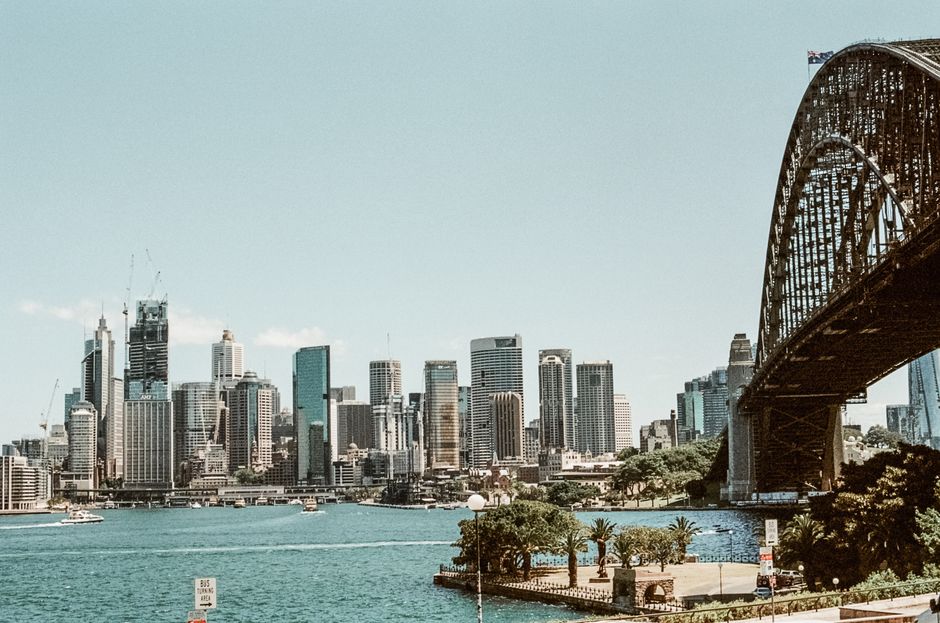
Sydney's public sector is sitting on tens of thousands of duplicate digital images — photographs, scanned heritage documents, infrastructure records — stored across fragmented systems at a combined annual cost that urban data managers say is difficult to even quantify because no single agency has completed a full audit. That gap, already a headache for administrators, is becoming harder to ignore as the NSW government pushes major infrastructure builds from Parramatta to Sydenham under the Metro West project and demands faster, cleaner data pipelines.
The timing matters. NSW Labor has staked much of its second-term pitch on delivery — housing approvals, transport timelines, planning decisions — all of which rely on accurate, searchable digital records. Duplicate imagery buried in council and state agency servers slows those workflows, inflates storage costs, and, in planning contexts, can mean an outdated site photograph is pulled instead of a current one. For a government already describing its electoral situation in difficult terms, administrative friction is something Macquarie Street can ill afford.
The City of Sydney Council has been running a digital asset management review through its Smart City programs team, based at the Redfern offices, which began consolidating image libraries across departments in mid-2025. The effort initially focused on the council's own photographic archive — estimated at several hundred thousand individual files — and has been cross-referencing metadata to flag duplicates before migrating to a unified content management platform. Results from the first phase were shared internally in March 2026, though a public-facing report has not yet been released.
The State Archives and Records Authority of NSW, headquartered in Kingswood in Western Sydney, runs a separate mandate covering government agencies, and has been piloting hash-based deduplication tools — software that generates a unique fingerprint for each image file and flags identical or near-identical copies — across a handful of departments since late 2024. The Kingswood facility holds physical and digital records for more than 270 NSW government bodies. The deduplication pilot is ongoing.
In Chippendale, the Australian Centre for Photography closed its physical gallery in 2024, but its digitised collection has moved into a managed cloud environment that, according to its public annual reports, has been structured from the outset to prevent duplicate ingestion. That kind of purpose-built approach is still the exception rather than the rule across Sydney's broader institutional landscape.
London's Government Digital Service issued binding guidance on digital asset deduplication for central government bodies in 2022, requiring agencies above a certain data threshold to run automated duplicate checks before any cloud migration. Amsterdam has gone further: the City of Amsterdam's data directorate published a 2023 framework mandating that all municipal photography be tagged at the point of capture with a unique asset ID, which means duplicates are caught before they enter the archive rather than cleaned up afterwards. Singapore's Integrated Land Authority, which manages geospatial and planning imagery, completed a system-wide deduplication pass in 2024 covering more than 4 million images, cutting active storage requirements by roughly 31 percent, according to the authority's published annual report.
Sydney has no equivalent citywide mandate. The patchwork between the City of Sydney Council, other metropolitan councils like Bayside and Inner West, and NSW state agencies means that three buildings on George Street could appear in dozens of separate archives under different file names with no automatic cross-referencing. Urban data specialists who study comparative smart-city programs have pointed to Singapore's approach — capturing metadata at the moment of creation rather than retrospectively cleaning archives — as the model most applicable to large multicultural cities with diverse departmental needs.
The practical consequences for everyday Sydneysiders are less visible but real. Planning applications on Parramatta Road or in the Sydenham-to-Bankstown corridor can be held up when planners pull incorrect or outdated site images from cluttered agency databases. Heritage assessments in inner suburbs like Glebe and Newtown rely on photographic records that, if duplicated and mislabelled, can create ambiguity about when a building modification occurred.
The NSW government has flagged a broader digital records reform in its 2025-26 budget cycle, allocating funding for a cross-agency data uplift program, though the specific provisions covering image deduplication have not been published in detail. For councils and state agencies watching Amsterdam and Singapore move decisively, the window to get ahead of the problem — rather than perpetually clean up behind it — is narrowing.
How does this story make you feel?
Spread the word
About this article
Published by The Daily Sydney
Daily brief
Free, in your inbox before 7am. Weekdays.
More in News