How Sydney's Property Market Got Hooked on Fake Photos — and Why It's Now Scrambling to Clean Up
Duplicate and misleading listing images have quietly distorted Sydney's real estate advertising for years; here's the trail that led us here.
Duplicate and misleading listing images have quietly distorted Sydney's real estate advertising for years; here's the trail that led us here.
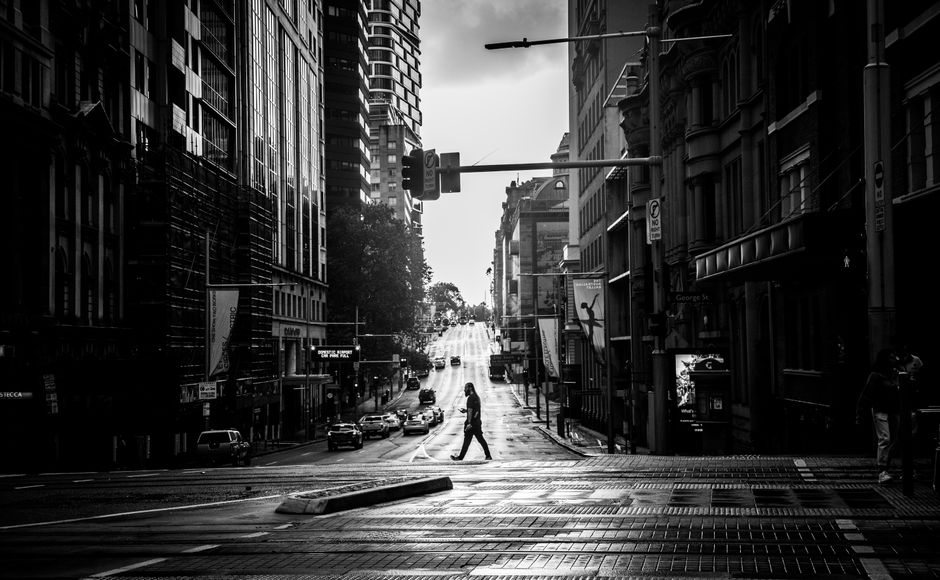
The practice has a bland technical name — duplicate image replacement — but its consequences for Sydney home buyers have been anything but minor. Across the city's overheated property market, listing photographs recycled from previous sales, different properties, or stock libraries have appeared on real estate portals, leaving prospective buyers touring homes that look nothing like the pictures that drew them there in the first place.
The issue matters more right now because housing affordability is the dominant political pressure point in NSW. With the Minns government staking significant political capital on supply-side reforms, consumer confidence in the property transaction process is fragile. Buyers stretched to their absolute limit — and in Sydney that limit is extreme — cannot afford to waste time, money, or emotional energy chasing properties misrepresented online.
The roots go back to roughly 2014, when smartphone camera quality improved enough that vendors and their agents began self-photographing properties to cut costs. At the same time, platforms like realestate.com.au and Domain began accepting bulk image uploads through third-party CRM software, with minimal automated checking for whether a photograph had already appeared against a different address. A bedroom shot from a Parramatta two-bedder could, with one errant upload, attach itself to a listing in Blacktown or Bankstown and sit there for weeks before anyone noticed.
By 2019 the Real Estate Institute of NSW had flagged image accuracy as a compliance grey area in its advertising guidelines, but enforcement remained the domain of NSW Fair Trading — an agency that, by its own published workload figures, handles tens of thousands of complaints annually across all consumer categories. Property image disputes rarely rose to the top of that queue. The absence of a dedicated, fast-track image verification requirement meant the market effectively self-regulated, and self-regulation proved inadequate.
COVID made things considerably worse. During the 2020–2021 lockdown periods, in-person inspections in suburbs such as Surry Hills, Newtown, and Penrith were suspended for extended stretches. Buyers and renters were, for the first time, making binding financial decisions based almost entirely on digital listings. The incentive for agents to present the most flattering possible images — whether or not those images accurately depicted the current state of the property — had never been higher.
Consumer advocates working out of Western Sydney Legal Centre, which serves communities across the Fairfield and Liverpool local government areas, began documenting a pattern of complaints from renters and buyers who described arriving at properties to find conditions that bore little resemblance to advertised photographs. In the rental market, where vacancy rates across Greater Sydney sat below 1.5 percent for much of 2023 and 2024 according to figures published by the NSW government's own housing data unit, tenants felt they had no practical choice but to proceed even when they suspected a mismatch.
The financial stakes crystallised further when CoreLogic data published in early 2025 recorded Sydney's median house price above $1.4 million. At those values, a buyer who commits to a building inspection — typically costing between $500 and $900 in metropolitan Sydney — on the basis of misrepresented photographs is not just inconvenienced. They are out of pocket in a market that does not wait for them to recover.
Domain and realestate.com.au have both introduced image-matching technology in the past 18 months intended to flag photographs that appear against multiple property addresses. Neither platform has publicly released detailed efficacy data on how many duplicate matches the tools have caught or removed.
NSW Fair Trading updated its property advertising fact sheet in late 2025 to explicitly state that listing images must reflect the actual condition of the property at the time of advertising. The updated guidance applies to both sales and rental listings and covers agent-uploaded and vendor-uploaded content alike.
For buyers and renters navigating the market today, the practical advice from consumer advocacy groups is consistent: cross-reference listing photographs using reverse image search tools before committing to an inspection fee, and document in writing any material differences between advertised images and the actual property. If a discrepancy is found, a complaint to NSW Fair Trading at its Parramatta office on Darcy Street can be lodged online and is free of charge. It is not a fast process, but it creates a paper trail — and right now, that paper trail is the only accountability mechanism most buyers have.
How does this story make you feel?
Spread the word
About this article
Published by The Daily Sydney
Daily brief
Free, in your inbox before 7am. Weekdays.
More in News