Property management fees compared across the city
As Sydney's rental yields tighten, savvy investors are scrutinising management costs—and the gap between inner-ring suburbs and outer-ring alternatives is widening.
As Sydney's rental yields tighten, savvy investors are scrutinising management costs—and the gap between inner-ring suburbs and outer-ring alternatives is widening.
Listen to this article · 4:01
Sydney investors chasing yield in 2026 face a hidden erosion: property management fees that can swing from 6 to 8.5 per cent of weekly rent, depending on postcode. In a market where Inner West and Northern Beaches command premium prices but deliver modest returns, those percentage points matter.
A two-bedroom terrace in Marrickville renting for $550 weekly will cost an investor roughly $286–$467 annually in management fees, depending on the agency. Cross to Strathfield—where median prices hover lower and weekly rents sit around $480—the same percentage bite translates differently. The absolute cost is smaller, but so too is the rent-to-price ratio that underpins yield.
"Investors are becoming fee-conscious," says James Hartley, director of a Sydney property advisory firm. "In a 4 to 5 per cent yield environment, a 7 per cent management fee plus council rates and maintenance can erode 40 to 50 per cent of net return."
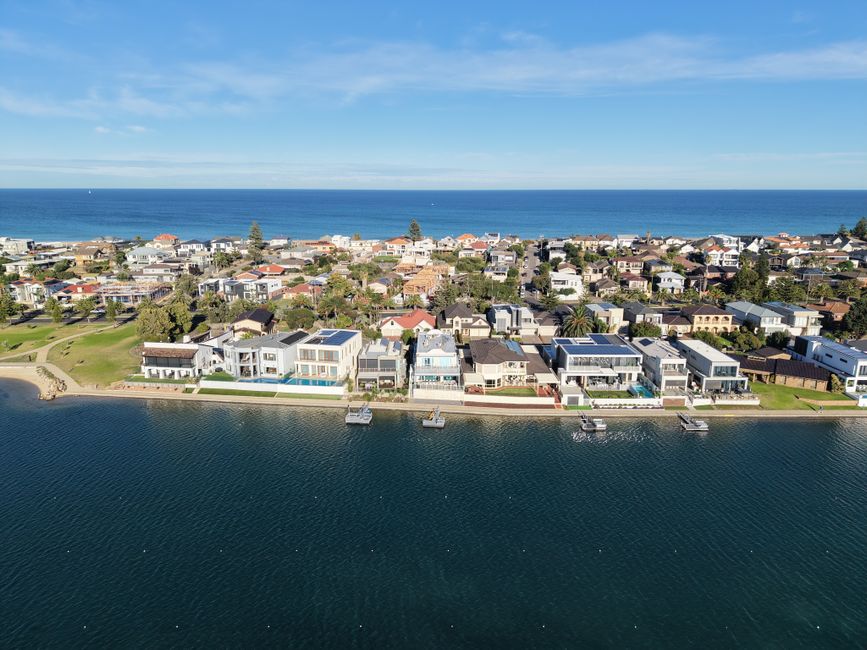
Across Sydney, fee structures vary considerably. Agencies in high-turnover areas like Parramatta and Penrith—where rental demand is steady and vacancy lower—often charge 7 to 7.5 per cent. Inner-West suburbs such as Newtown and Ashfield, where investor competition is fierce, have seen some agencies drop to 6.5 per cent. Premium postcodes along the Northern Beaches and around Woollahra tend toward 7.5 to 8 per cent, justified partly by higher property values and perceived service tiers.
Additional levies further complicate the picture. Some agencies bundle lease preparation, tenant screening, and inspections into a flat fee; others charge separately. A property manager handling a $1.8M apartment in Double Bay may charge $8,000 annually plus $200 per inspection, while a similar service in Bankstown might cost $5,000 plus $120 per inspection.
First-time investors often overlook this friction. A buyer scouting Earlwood or Yagoona—where unit yields currently sit around 4.8 to 5.2 per cent—should assume management fees will consume 60 to 80 basis points. On a $650,000 property yielding $33,800 annually, that's $2,200–$2,900 in direct management costs.
The tight inner-ring supply that supports northern beaches and Inner West premiums also means fewer comparable properties for agencies to manage, potentially pushing fees higher. Meanwhile, outer-ring suburbs benefit from stronger rental demand relative to supply, allowing managers to operate leaner fee structures.
Experienced investors are now bundling this reality into yield calculations before purchase. The difference between a 6 per cent fee suburb and a 7.5 per cent fee suburb can shift a property from modestly positive to breakeven on rental return alone—making the case for stronger capital growth expectations, or steering clear entirely.
This article was compiled by AI from the sources linked above and screened before publishing. See our editorial standards.
How does this story make you feel?
Spread the word
About this article
Published by The Daily Sydney
Daily brief
Free, in your inbox before 7am. Weekdays.
More in Property