The rent-vesting strategy is straightforward: rent affordably in one location while purchasing an investment property elsewhere, typically in a growth corridor with lower entry costs. For Sydney renters priced out of the inner west and Northern Beaches, it's becoming a lifeline.
Consider the maths. A young professional renting a one-bedroom apartment in Marrickville or Enmore pays roughly $550–650 per week. That same budget won't service a mortgage on a $1.4 million median-priced home in those suburbs. But it could comfortably cover rent in, say, Penrith or Campbelltown, where a modest two-bedroom apartment runs $420–480 weekly—while that $200,000–$300,000 deposit gap funds an investment property elsewhere.
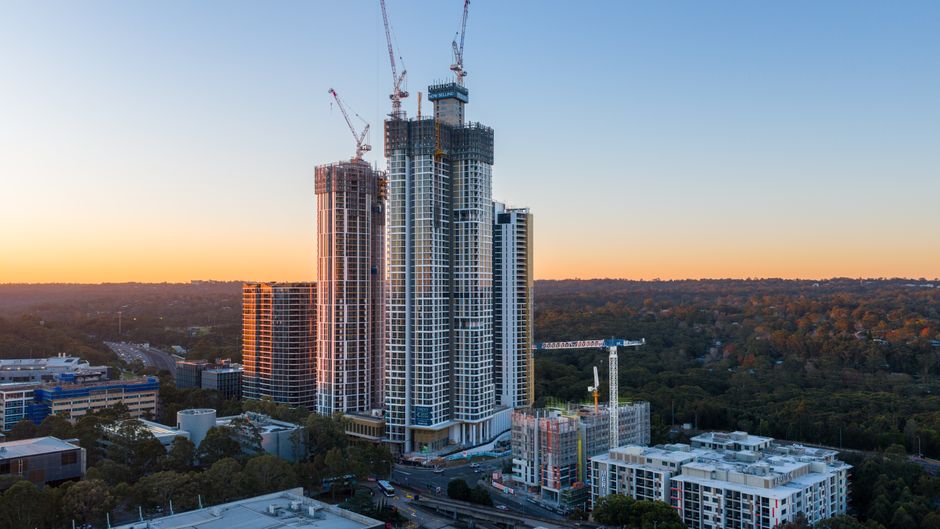
The logic hinges on Australia's negative gearing rules and capital growth expectations. Rent-vesters typically target emerging markets where rental yields exceed 5–6 per cent and vacancy rates remain low. Properties near transport corridors—say, along the Metro West line towards Westmead—appeal to investor-occupiers who can service higher debt ratios through investment income while living in cheaper rental accommodation.
Sydney's tight inner-ring supply and 65–72 per cent clearance rates underscore why this strategy resonates. First-home buyers facing $100,000+ competition at auction in suburbs like Dulwich Hill or Rozelle increasingly recognise they'll own property eventually—just not in their preferred postcode immediately. The psychological shift is significant: acceptance that wealth-building might start 40 kilometres west.
Tax benefits sweeten the deal. Mortgage interest and investment property expenses remain deductible, and capital gains within superannuation concessional accounts can halve tax liability. A savvy rent-vester maximises these while their inner-city rent generates no tax shield—a mathematical advantage worth thousands annually.
The risks, however, demand scrutiny. Interest rate rises compress rental yields quickly. A property bought at 5 per cent yield becomes marginal at 6.5 per cent rates. Vacancy spikes in oversupplied markets—parts of outer western Sydney have seen 6–8 per cent vacancies—can derail serviceability. And rent-vesting requires discipline: the temptation to upgrade your own rental as incomes rise is real.
For Sydney's squeezed first-home buyers, rent-vesting offers a third way: neither renting indefinitely nor betting the house on a single property in an unaffordable neighbourhood. It's pragmatic, tax-efficient, and increasingly common among those who've accepted the $1.4 million median as a post-purchase milestone, not a starting point.
This article was compiled by AI from the sources linked above and screened before publishing. See our editorial standards.