When Transport NSW announced the final alignment of the Western Sydney Metro extension earlier this year, few expected the quiet streets around Claremont and Mount Pleasant to become Sydney's fastest-moving property frontier. Yet three months on, planning applications have nearly doubled, and agents report inquiry surges of 40–60 per cent across a 5km radius.
The shift is reshaping housing accessibility in a region where median values sit comfortably below $800,000—a full $600,000 less than Inner West benchmarks. For first-home buyers squeezed by Sydney's tightening supply and $1.4 million regional medians, the trade-off of a 35-minute commute for a standalone home with land appears increasingly rational.
"We're already seeing pre-development land banking," says Sarah Chen, director at Penrith-based Century 21 Pinnacle. "Three months ago, properties on Henry Street and The Northern Road were moving slowly. Now we've got multiple offers above asking within days."
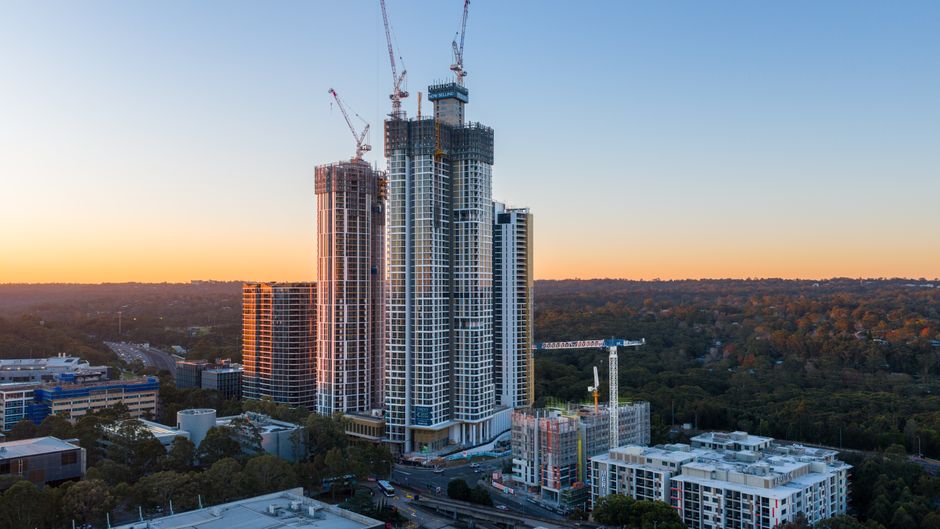
The metro project itself—connecting Westmead to Claremont by 2031, then Mount Pleasant by 2033—unlocks approximately 800 hectares of medium-density zoning in precincts that have languished for years. Penrith Council has already fast-tracked planning overlays for mixed-use development around both future stations, with masterplans showing capacity for 2,400 residential units and 15,000 sqm of retail and commercial space.
Local data supports the optimism. Claremont's median house price has risen 6.2 per cent in the past 12 months—modest by Sydney standards, but notably driven by investor activity rather than end-user demand. Apartment pre-sales in nearby Kingswood are tracking 15 per cent faster than last year, according to Place Advisory.
The real appeal lies in yield arbitrage. A first-home buyer securing a $650,000 townhouse today—financed within serviceability tests—could realistically see 4–5 per cent annual growth once metro connectivity is proven, without the leverage risk of chasing expensive Inner West stock.
Not everyone is convinced the premium will stick. Experts caution that outer-metro corridors often plateau once novelty fades; Mount Druitt's rail access, for instance, has failed to command significant price appreciation in two decades. Oversupply from rushed development could also erode gains if builders flood the zone before demand follows infrastructure completion.
Still, for agents, developers, and investors, the calculus is clear: Claremont and Mount Pleasant represent the rare Sydney window where transport infrastructure precedes housing maturity. That window, however, may not remain open long.
This article was compiled by AI from the sources linked above and screened before publishing. See our editorial standards.