Sydney's property market has delivered a striking turnaround in the June quarter, with median prices climbing 8.2 per cent compared to the same period last year—a trajectory that defies earlier predictions of prolonged weakness and signals renewed buyer confidence heading into the second half of 2026.
The median dwelling price across Greater Sydney now sits at approximately $1.4 million, but the real story lies in the divergence between precincts. Inner West suburbs including Marrickville and Enmore have recorded the strongest gains, with year-on-year growth pushing past 12 per cent as young professionals and downsizers increasingly favour walkable neighbourhoods close to the CBD. A two-bedroom character cottage on Addison Road in Marrickville that would have fetched $1.15 million in June 2025 is now commanding closer to $1.3 million—a direct reflection of sustained migration demand and limited stock turnover.
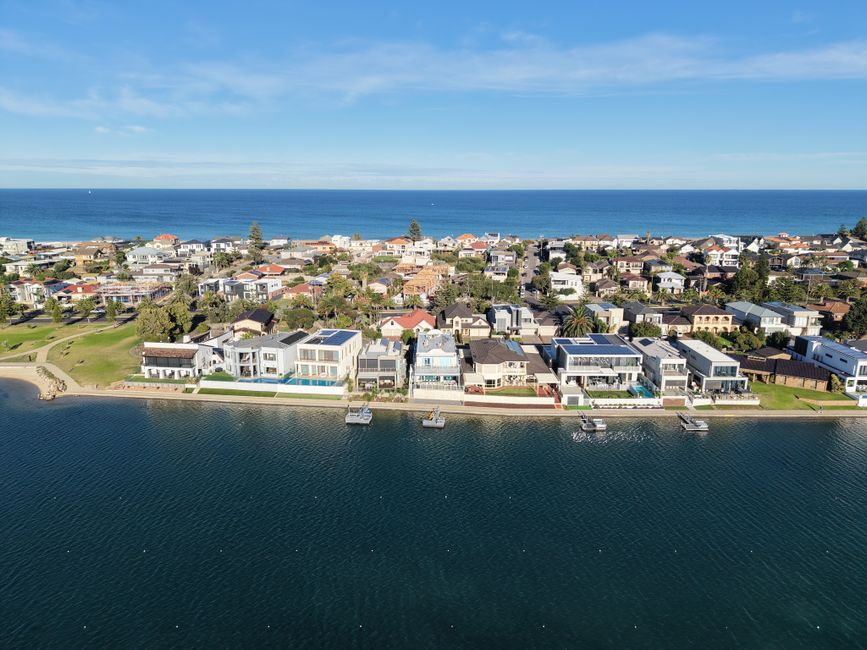
The Northern Beaches have proven equally resilient. Beachside pockets like Collaroy and Narrabeen, anchored by local amenity and the expanding network of surf parks across NSW, have seen median values increase by 9 per cent year-on-year. Waterfront and near-water properties continue to command premiums, though broader beachside stock has also benefited from the renewed appetite for lifestyle-adjacent locations within commutable distance of the city.
Clearance rates have stabilised in the 65–72 per cent range across major auctions, a modest improvement from the lows recorded earlier in the year. Real estate agents report that vendor confidence has returned, particularly among those holding quality inner-ring properties. The supply-demand equation remains decisively tilted in sellers' favour, especially for homes priced between $1.2 million and $1.8 million.
Outer suburbs and emerging growth corridors, meanwhile, continue to lag. Areas beyond the M7 motorway saw year-on-year growth of just 3.4 per cent, reflecting the persistent preference for established neighbourhoods with proven infrastructure and schools.
Analysts caution that the quarterly momentum, while encouraging, masks underlying volatility. Rising interest rate expectations and tightening rental yields are already tempering buyer enthusiasm in certain pockets. Still, the June quarter data suggests that the correction phase may have run its course, and Sydney's market is settling into a phase of moderate, differentiated growth—shaped largely by location, supply constraints, and the city's continued draw as Australia's migration hub.
This article was compiled by AI from the sources linked above and screened before publishing. See our editorial standards.