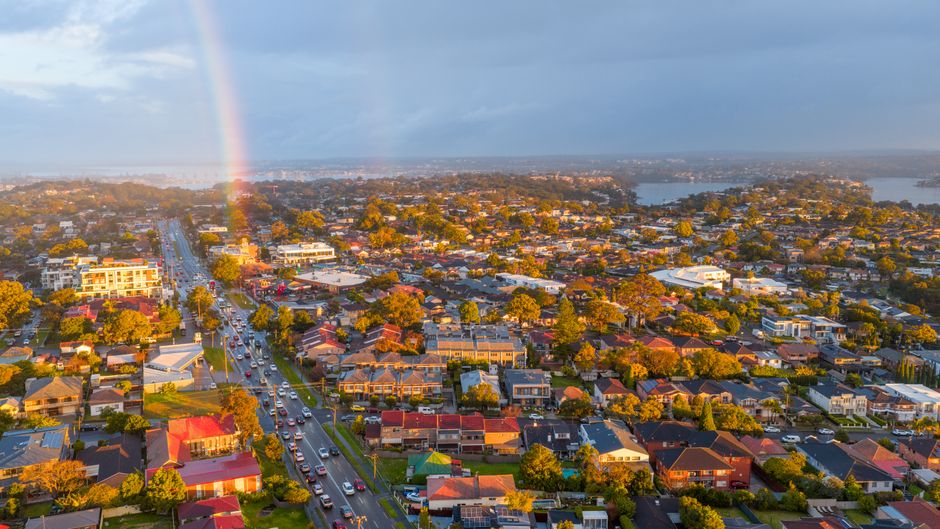
Sydney's median house price is holding at roughly $1.4 million, but that number masks something more interesting happening at the street level: a concentrated burst of new development approvals is beginning to reprice entire neighbourhoods, sometimes before a single slab of concrete gets poured.
The timing matters because Sydney has entered a period where supply and demand are grinding against each other in ways that put enormous leverage in the hands of developers. Migration-driven demand pushed the city's rental vacancy rate below one percent in several inner-ring suburbs through the first half of 2026, and the state government's Transport Oriented Development program — which fast-tracks higher-density approvals within 400 metres of train stations — has sent councils scrambling to identify which precincts will change fastest.
Where the Approvals Are Landing
Parramatta Road is already carrying the weight of several pending mixed-use towers, with Homebush and Burwood the flashpoints. The Burwood Town Centre precinct, subject to a rezoning gazetted in late 2025, now permits residential towers up to 22 storeys along Railway Parade and Burwood Road. Agents in Burwood report inquiry from investors who bought sub-$1.1 million two-bedroom apartments in 2023 and are now fielding unsolicited approaches from developers chasing amalgamated sites.
Further north, the Crows Nest metro station precinct — anchored by the new Victoria Cross and Crows Nest stations on the Sydney Metro City & Southwest line — has become one of the city's most active development corridors. JMD Design and several other firms lodged development applications with North Sydney Council between January and May 2026 for projects ranging from 120 to 340 apartments within walking distance of the Pacific Highway interchange. Established houses on streets like Hume Street and Shirley Road, which traded for between $2.8 million and $3.4 million before metro construction started, are now being valued 12 to 18 percent above that range, according to CoreLogic suburb-level data published in June.
Pyrmont is a different story. The Pyrmont Peninsula Place Strategy, finalised by the NSW Department of Planning in 2024, unlocked an additional 4,000 dwellings for the precinct through to 2041. Three projects totalling roughly 1,100 apartments are in various stages of approval along Union Street and Harris Street. Existing Pyrmont apartment owners are watching closely: a two-bedroom unit that traded for $1.25 million in 2022 is now clearing $1.55 million at auction, driven partly by the perception that the suburb is being repositioned upmarket rather than densified downward.
What New Supply Actually Does to Prices — and What It Doesn't
The conventional assumption is that new supply cools prices. Sydney's experience across the past decade is more complicated. Suburbs that received concentrated, high-quality residential development — Green Square being the clearest example after the $1 billion town centre opened in stages from 2018 — saw median prices rise faster than the broader LGA because the new amenity attracted wealthier buyers who then competed for existing stock as well.
The clearance rate across Sydney's inner ring has been running between 68 and 72 percent through the June quarter of 2026, meaning the vast majority of properties taken to auction are selling. That's not a market under stress from oversupply. What it reflects is that new apartments and established houses are often competing for completely different buyer pools, and the arrival of a luxury tower on a given block frequently signals gentrification rather than dilution.
Stamp duty remains a complicating factor. NSW buyers purchasing at the $1.4 million median are paying approximately $66,000 in transfer duty under the current thresholds — a number that hasn't been adjusted since 2023 despite price growth of around nine percent in that period. First-home buyers using the First Home Buyer Assistance Scheme are exempt up to $800,000, a threshold that rules out the vast majority of established houses in suburbs now flagged for rezoning.
For buyers considering a purchase near any of Sydney's active development precincts, the practical advice is straightforward: pull the relevant local environmental plan and check the development application register before exchanging contracts. A neighbour's approved 12-storey tower won't automatically destroy your amenity — but it will change your outlook, your shadows, and your assumptions about who moves in next door. That's worth knowing before settlement day.