Rate Cut Fever Is Reshaping Sydney's Property Market — But Not How You'd Expect
Buyers who spent 2025 sitting on the sidelines are back, but they're pickier, faster and far more strategic than the last boom cycle.
Buyers who spent 2025 sitting on the sidelines are back, but they're pickier, faster and far more strategic than the last boom cycle.
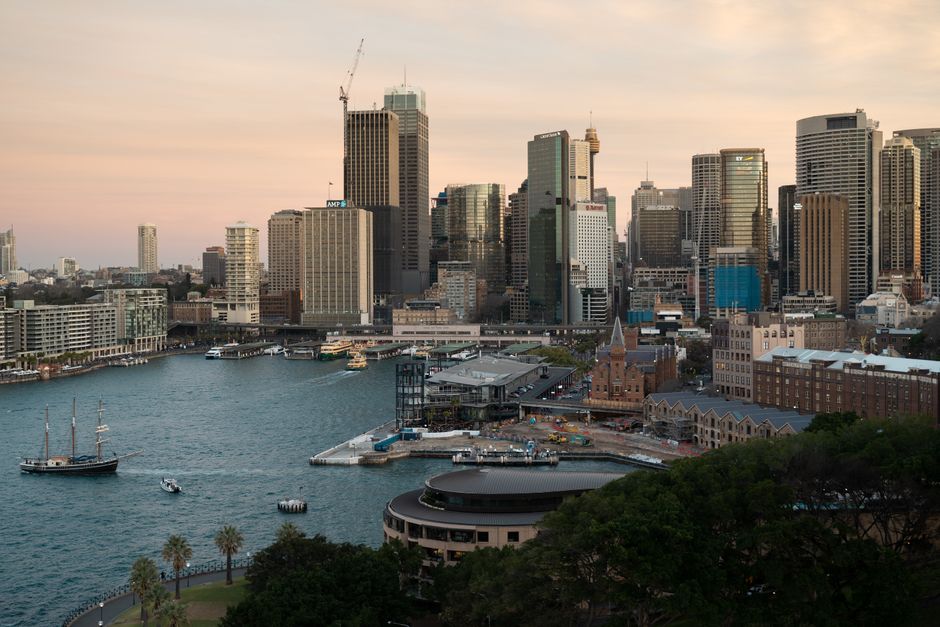
Sydney's auction floors are busier than they were six months ago, but the buyers showing up aren't behaving the way sellers hoped. Clearance rates across the metropolitan area held between 68 and 71 percent through the final two weekends of June, according to figures from Domain and PropTrack — solid, but not the frenzied numbers that typically follow a genuine rate-cut cycle. What's changed is the psychology: buyers are acting on the expectation of cuts rather than waiting for them to land.
The Reserve Bank of Australia has cut the cash rate twice this year, bringing it to 3.85 percent after its May meeting, with financial markets pricing in at least one more reduction before Christmas. That forward guidance is doing the heavy lifting. Mortgage brokers around Parramatta Road and in the Northern Beaches report a measurable spike in pre-approval applications since February — buyers locking in figures now while they scout properties, rather than scrambling to get finance sorted after a successful bid. The shift matters because it's compressing decision timelines and, in tightly held suburbs, pushing prices up faster than the headline data suggests.
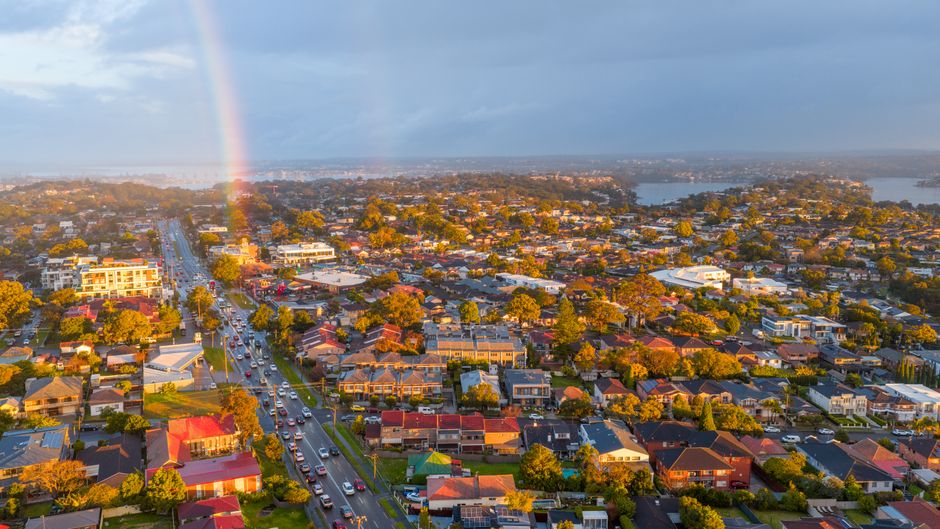
The clearest evidence is in the inner west. Leichhardt and Rozelle recorded median house prices of approximately $1.92 million and $2.15 million respectively in the June quarter, both up roughly five percent from the same period last year. Properties that would have sat for three or four weeks in the second half of 2025 are now going under the hammer within ten days of listing, according to several agencies operating on Norton Street and along Darling Street, Balmain. Multiple-offer scenarios before auction — the kind that were routine in 2021 but had largely disappeared — are appearing again on properties priced under $2 million.
On the Northern Beaches, the story is more nuanced. Dee Why and Narrabeen are attracting buyers priced out of Manly and Freshwater, a pattern that accelerated when the median in Manly crossed $3.5 million earlier this year. The NSW Government's First Home Buyer Assistance Scheme still exempts purchases under $800,000 from stamp duty entirely, but that threshold is functionally irrelevant in most of Sydney's premium coastal strip, meaning buyers there are carrying the full transfer cost on top of larger deposits — and still bidding hard. That willingness to absorb those costs signals genuine demand conviction, not just opportunism driven by cheap credit.
Sydney's overall median house price sits at approximately $1.43 million as of the June 2026 quarter — up from $1.36 million twelve months earlier, a gain of just over five percent. The unit market is tighter: the inner-city apartment median has climbed closer to $900,000, partly driven by migration-related rental pressure converting long-term renters into buyers. Sydney Airport's catchment suburbs — Mascot, Wolli Creek, Arncliffe — are seeing renewed investor interest after two years of relative quiet, with yields ticking up as rents remain elevated.
The risk in the current environment is what agents around the Parramatta CBD and Blacktown are flagging quietly: buyers are borrowing at their pre-approval ceiling, banking on one or two more cuts to keep repayments manageable. If the RBA pauses beyond December — which remains a genuine possibility given persistent services inflation — that calculation breaks. Families who stretched to $1.1 million in Western Sydney on an assumption of a 3.5 percent cash rate by mid-2027 could find themselves in genuine stress if that target slips.
For buyers entering the market in the next 90 days, the practical calculus is straightforward. Get pre-approval done through a broker rather than a single lender — the gap between the best and worst variable rates on offer across the major banks is currently around 60 basis points, which on a $900,000 loan translates to roughly $5,400 a year. Budget conservatively, particularly on the Northern Beaches and in the inner west where competition is pushing properties three to eight percent above reserve regularly. And watch the August RBA meeting closely: the board's language around inflation progress will tell you more about where this market heads than any auction result on any given Saturday morning.
How does this story make you feel?
Spread the word
About this article
Published by The Daily Sydney
Daily brief
Free, in your inbox before 7am. Weekdays.
More in Property