The Sydney property market, explained
A plain-English guide to how Australia's most expensive housing market works, the forces that move it, and where to find the official figures.
A plain-English guide to how Australia's most expensive housing market works, the forces that move it, and where to find the official figures.
Listen to this article · 3:47
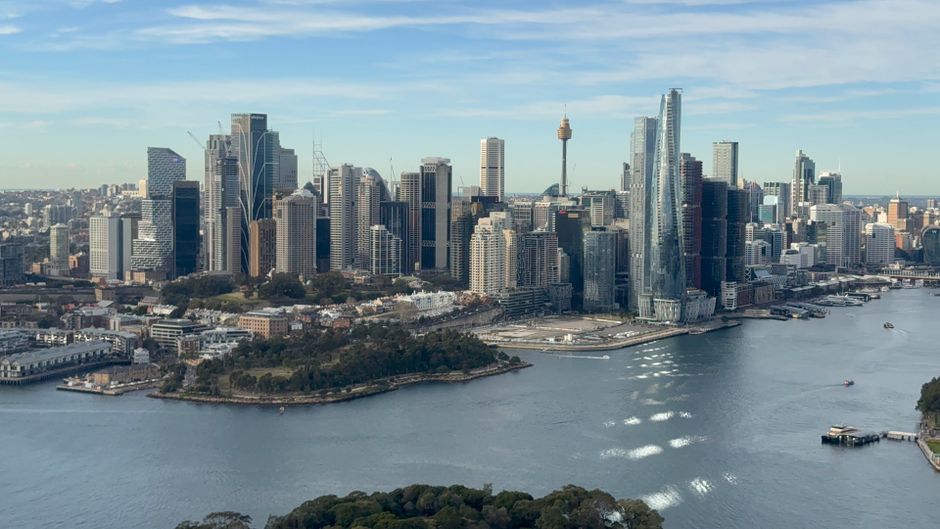
Sydney is Australia's largest city economy and its most expensive housing market. Greater Sydney generates around a fifth of national output and roughly two-thirds of the New South Wales economy, with the current figures published by the NSW Government and the Australian Bureau of Statistics. The city is the country's financial capital, home to the Australian Securities Exchange, the Reserve Bank of Australia and the head offices of the major banks. That deep base of finance, professional services and technology jobs, concentrated in precincts such as the CBD, North Sydney, Parramatta, Macquarie Park and the emerging Western Sydney Aerotropolis, underpins the demand side of housing.
This article is general information only. It is not financial or legal advice, and it deliberately avoids quoting any current price, interest rate or median, because those figures move constantly. Where a number matters, it links to the official source.
Housing markets are complex, but most of what moves Sydney values can be grouped under four headings.
Sydney's "median dwelling value" blends two different products. Houses (detached homes on their own land) typically carry a higher median than units and apartments, partly because land is the scarce, appreciating component. Apartments offer a lower entry price and proximity to transport and employment, but involve strata title, body-corporate levies and shared common property. House and unit medians can move at different speeds across the market cycle, which is why data providers report them separately. For current median values and growth figures, consult independent data providers such as Cotality (CoreLogic), Domain or PropTrack, alongside the Australian Bureau of Statistics. There is no single fixed "Sydney price", so it is worth checking the latest release rather than relying on a remembered number.
Residential property in Sydney is sold either by private treaty (a negotiated sale at a listed asking price) or by public auction, which is common across the city. Weekly auction clearance rates are a closely watched gauge of market health. Buyers usually engage a conveyancer or solicitor. A 10 per cent deposit is typical at exchange of contracts, with settlement commonly around six weeks later. New South Wales provides a cooling-off period for private-treaty residential sales, but none applies when you buy at auction.
When you buy, you generally pay transfer duty (stamp duty) to Revenue NSW, calculated on a sliding scale based on the property's value. Duty is usually payable within three months of signing the contract, or earlier on or before settlement. Foreign purchasers pay an additional surcharge, while eligible first home buyers may qualify for a full exemption or concession under the First Home Buyers Assistance Scheme, subject to value thresholds. The exact brackets, surcharge rate and a duty calculator are published by Revenue NSW and via Service NSW.
Most Sydney rentals are managed by a licensed agent on behalf of a landlord. Tenants apply, sign a residential tenancy agreement and lodge a bond, which is capped at four weeks' rent and must be held by NSW Fair Trading, normally through Rental Bonds Online. Sydney has run a chronically tight rental market, with low vacancy rates feeding strong rent growth.
Tenancy law has shifted recently. Since 19 May 2025, "no grounds" evictions are unlawful in NSW: a landlord must give a valid, prescribed reason with supporting evidence to end any tenancy, such as sale with vacant possession, the owner moving in, or major renovation. Rent on an ongoing tenancy can be increased no more than once every 12 months, and while increases are not capped by percentage, a tenant can challenge an excessive rise at the NSW Civil and Administrative Tribunal. Reforms have also made it easier to keep pets and required landlords to offer a fee-free way to pay rent. The authoritative, current detail sits with NSW Fair Trading.
Because medians, rates and duty thresholds change, the most useful skill is knowing where to look. The ABS publishes price, inflation and rental data; the RBA sets and explains interest rates; Revenue NSW covers transfer duty and surcharges; and Moneysmart offers independent, government-run guidance on mortgages and budgeting. Checking these directly is the most reliable way to understand the Sydney market at any point in its cycle.
Sources: NSW Government (NSW economy); Reserve Bank of Australia; Australian Bureau of Statistics; ABS population statistics; ABS rental market insights; Revenue NSW transfer duty; Service NSW stamp duty calculator; NSW Fair Trading rental law changes; NSW residential rental bonds; Moneysmart (ASIC).
This article was compiled by AI from the sources linked above and screened before publishing. See our editorial standards.
How does this story make you feel?
Spread the word
About this article
Published by The Daily Sydney
Daily brief
Free, in your inbox before 7am. Weekdays.
More in Finance