Sydney street artists challenge muralism's commercialisation
Newtown and Marrickville's emerging creators push beyond walls, redefining public art as galleries and brands vie for control.
Newtown and Marrickville's emerging creators push beyond walls, redefining public art as galleries and brands vie for control.
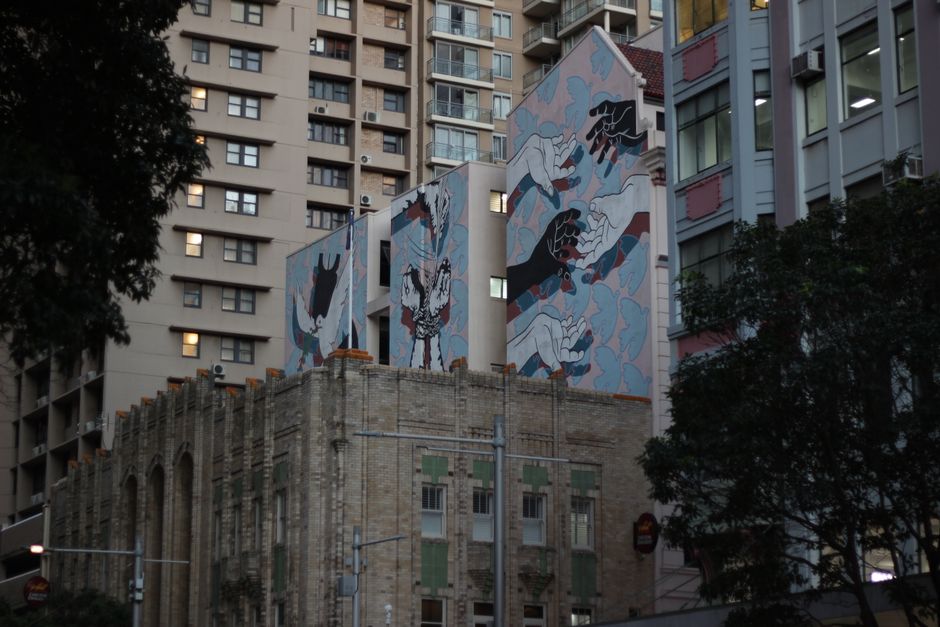
Walk down Enmore Road in Marrickville on any given Saturday, and you'll witness something peculiar: tourists queuing to photograph murals that didn't exist three years ago, while locals debate whether the suburb has finally "made it" or sold out entirely. The tension at the heart of Sydney's street art renaissance is no longer whether graffiti belongs on our walls, but who gets to decide what stories those walls tell.
The shift reflects a broader creative restlessness among Sydney's under-35 visual artists. While established names like Anthony Lister and Fintan Magee have secured international representation and gallery representation—commanding five-figure prices at auction—a new cohort is deliberately sidestepping the gallery circuit altogether. They're working smaller, faster, and with radical intention across Newtown's King Street laneways, the sprawling walls of Alexandria's Alexandria Park precinct, and increasingly, the inner-west's lesser-known pockets like Marrickville's Addison Road community centre corridor.
The distinction matters. Institutional street art—council-approved murals, advertising-backed projects, heritage precinct developments—now comprises an estimated 60% of public wall commissions across inner Sydney, according to street art advocacy group Bomb It. Meanwhile, emerging artists are experimenting with techniques that resist permanence: wheat-paste installations, projection-based interventions, and intentionally ephemeral works that photograph better than they survive.
"There's a real conversation happening about who benefits when street art becomes tourism infrastructure," says the Marrickville-based creative collective Outer Reaches, which has cultivated a following through deliberately undocumented works and site-responsive installations that prioritise community engagement over Instagram aesthetics. Their approach reflects a generation skeptical of the commodification visible on Enmore Road, where wall rentals reportedly fetch $3,000–$8,000 per piece from brands.
Newtown's independent venues—Zanzibar, The Basement, Mary's—continue nurturing emerging talent through collaboration, though competition for wall access intensifies yearly. Meanwhile, the City of Sydney's 2025–2026 public art strategy allocated $4.2 million toward community-led design projects, creating new pathways for artists navigating between street credibility and institutional legitimacy.
The question for Sydney's next creative wave isn't whether street art belongs in our cities—it's become fundamental to our identity. It's whether the artists driving innovation will remain visible, valued, and able to create without the permission of corporate sponsors or heritage councils.
That conversation will shape what our walls say for the next decade.
This article was compiled by AI and screened before publishing. See our editorial standards.
How does this story make you feel?
Spread the word
About this article
Published by The Daily Sydney
Daily brief
Free, in your inbox before 7am. Weekdays.
More in culture