The Sydney Solar-Storage Startup You Need to Know About This Month
Brighte Energy's new embedded-network product is quietly reshaping how apartment blocks across Greater Sydney pay for — and share — renewable power.
Brighte Energy's new embedded-network product is quietly reshaping how apartment blocks across Greater Sydney pay for — and share — renewable power.
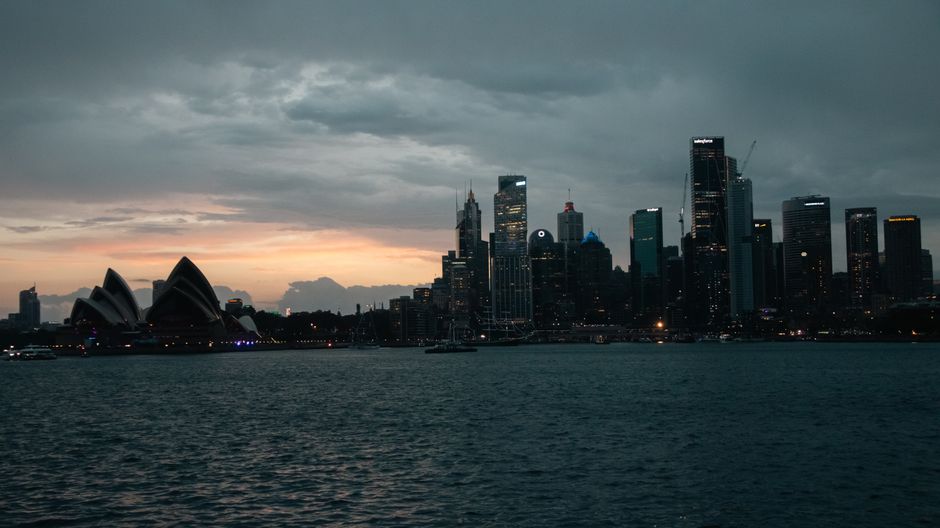
Brighte Energy, headquartered at 1 Bligh Street in the CBD, quietly launched its Shared Solar product for strata-titled residential buildings at the end of June, and the timing could hardly be more pointed. Feed-in tariff rates in New South Wales dropped again on 1 July 2026, hitting a new floor of 4.5 cents per kilowatt-hour — roughly a third of what rooftop generators were banking just four years ago. For detached homeowners, that erosion hurts. For apartment dwellers, who have historically been locked out of rooftop solar entirely, Brighte's product represents the first genuinely accessible on-ramp.
The mechanics matter here because they have defeated previous attempts. Strata law in NSW had long made it difficult to apportion solar generation fairly across dozens of individually metered units. Brighte is running its platform on top of an embedded network licence — approved by the Australian Energy Regulator in March 2026 — that lets a single rooftop array feed directly into common areas and individual apartments simultaneously, with software handling the real-time allocation. The company claims owners corporations can cut building-wide energy costs by up to 35 percent in the first year.
Australia's grid operator, AEMO, reported in May that Sydney's daytime wholesale spot price averaged below $40 per megawatt-hour across the first quarter of 2026, a direct consequence of the solar glut that has made residential export almost worthless. That same oversupply, paradoxically, is what makes self-consumption products like Brighte's so compelling: the value is in using the electrons you generate, not selling them back.
The company's current pipeline includes three buildings already under contract in the inner west — one on Pyrmont Bridge Road in Pyrmont and two in the Erskineville-St Peters corridor — with installs scheduled before October. Pyrmont alone has more than 40 strata complexes within 500 metres of the foreshore, most of them built between 1998 and 2010 with flat commercial-grade rooftops that are structurally suitable for panel arrays. Brighte's installers are using Q CELLS 440W panels sourced through a procurement deal with distributor Rexel Australia, and pairing them with BYD Battery-Box Premium HVS storage units in basement plant rooms.
The upfront cost for a 20-unit building runs between $180,000 and $260,000 depending on roof access complexity, but Brighte's own green finance arm offers a loan product at 6.99 percent per annum over ten years, meaning an owners corporation avoids a large special levy. Payback modelling the company shared with The Daily Sydney — based on Sydney's average strata electricity tariff of 32 cents per kilowatt-hour and 4.8 peak sun hours per day — puts break-even at around seven years for a north-facing roof with minimal shading.
Brighte isn't alone. The NSW Government's Sustainable Buildings program, administered through the Department of Planning, has committed $12 million over three years to co-fund exactly this category of strata solar upgrade, and applications for the second funding round open on 1 September 2026. The City of Sydney Council is separately running its CitySwitch program out of offices on Pitt Street, which now includes strata-specific advisory sessions held monthly at the Customs House Library on Alfred Street.
Several competitors are circling the same opportunity. Origin Energy lodged an embedded network application with the AER in April, and Powerclub — the Sydney-based retail disruptor — has been trialling a peer-to-peer trading layer for apartment precincts in Waterloo since late 2025. The market is getting crowded fast.
For owners corporations ready to act before the NSW co-funding round closes, the practical steps are straightforward: commission an energy audit through a Clean Energy Council-accredited assessor, confirm roof loading capacity with a structural engineer, and lodge an expression of interest with either Brighte or the Sustainable Buildings program before mid-August to allow enough lead time for a September application. Buildings that move now will be generating their own power — and paying dramatically less for it — well before the next rate review hits in January 2027.
How does this story make you feel?
Spread the word
About this article
Published by The Daily Sydney
Daily brief
Free, in your inbox before 7am. Weekdays.
More in tech