Sydney's Coworking Boom: What Workers, Job Seekers and Professionals Need to Know
Flexible desks, hybrid mandates and rising CBD rents are reshaping where Sydney professionals work — and the smart ones are already adapting.
Flexible desks, hybrid mandates and rising CBD rents are reshaping where Sydney professionals work — and the smart ones are already adapting.
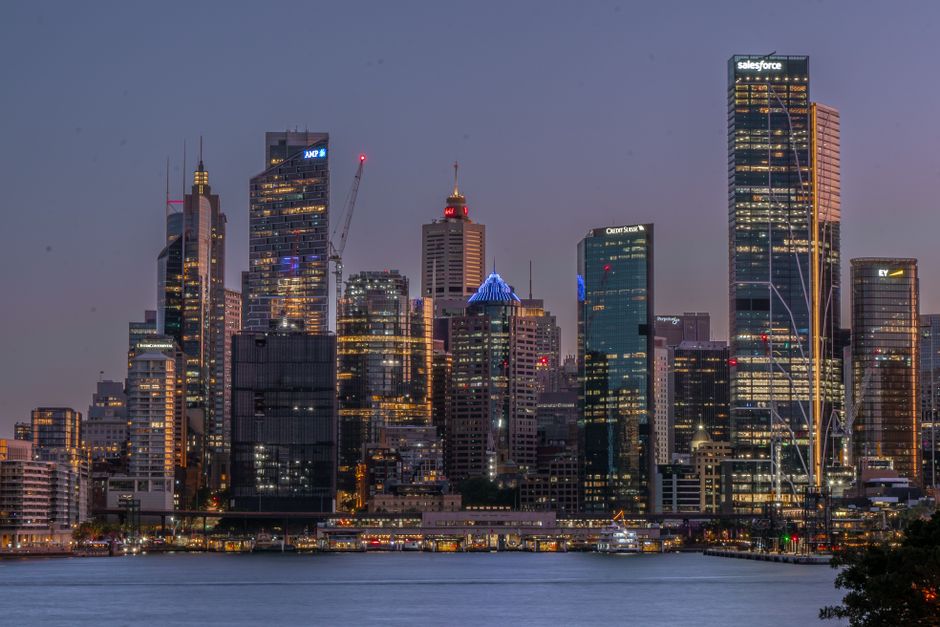
Sydney's coworking market has hit an inflection point. Occupancy rates across flexible workspace providers in the CBD and inner suburbs climbed to 87 percent in the June 2026 quarter, according to figures from the Property Council of Australia — the highest recorded since the sector's post-pandemic restructure began in 2022. For anyone job-hunting, renegotiating an employment contract or simply trying to figure out where to plant a laptop, the calculus has changed.
The shift matters now for a specific reason: major Sydney employers including Atlassian, Canva and a string of ASX-listed financial firms have tightened their hybrid policies in the past six months, many settling on a three-days-in, two-days-flexible split. That middle ground has created a surge in demand for spaces that aren't quite home and aren't quite a traditional office — and a genuine industry has grown up to meet it.
The heaviest concentration of coworking options sits in three corridors: the Tech Central precinct around Haymarket and Ultimo, the stretch of Pitt Street and Martin Place in the CBD core, and an emerging cluster in Surry Hills along Crown Street. WeWork still operates three Sydney locations, including its flagship on 320 Pitt Street, but local operators have taken significant market share. Spaces like Fishburners at UTS in Ultimo — which houses roughly 800 members across its technology-focused community — and Tank Stream Labs on Tank Stream Way have become genuine professional hubs rather than glorified cafés with fast Wi-Fi.
Pricing varies sharply by location and commitment. A hot desk in the CBD currently runs between $450 and $600 per month at most mid-tier providers. Dedicated desks with lockable storage sit closer to $900 to $1,200 monthly. Private offices for small teams of four or five people start at roughly $3,800 per month in the Haymarket precinct and can exceed $6,500 in premium Martin Place buildings. Day passes — the option most relevant to job seekers and freelancers testing the waters — range from $35 to $75 depending on the venue and the amenities included.
For job seekers specifically, the calculus on coworking has shifted from a nice-to-have to something closer to professional infrastructure. Recruiters at Hays Australia and Robert Half have both flagged — in public-facing market reports this year — that candidates who demonstrate a structured work environment during remote interview processes are more likely to progress past initial screening. Showing up to a video call from a professional shared space, rather than a kitchen table, still carries weight.
The practical advice breaks down by employment situation. Employees at companies with a formal hybrid policy should check whether their employer has a corporate coworking arrangement — Atlassian, for instance, extended its TEAM Anywhere program in early 2026 to include subsidised access to select Sydney coworking venues for staff travelling from outside the inner city. Many workers simply don't know the benefit exists.
Contractors and freelancers face a different set of decisions. The Australian Taxation Office updated its home office expense guidelines for the 2025–26 financial year, and the revised fixed rate of 70 cents per work-from-home hour means the tax incentive for keeping your desk at home has actually grown marginally. But coworking memberships remain fully deductible as a business expense for sole traders, which levels the comparison considerably.
Job seekers who are between roles should treat a coworking membership — even a part-time day-pass arrangement — as an investment in structure and professional visibility. The Surry Hills and Redfern tech community in particular operates through networks that still form face-to-face; showing up consistently to a venue like Fishburners or the Stone & Chalk hub at the Australian Technology Park in Eveleigh puts you in proximity to hiring managers and startup founders in ways that LinkedIn simply cannot replicate.
Sydney's flexible workspace market will keep growing through the rest of 2026, with at least two new operators — one Singapore-based, one domestic — confirmed to be opening locations in the Barangaroo precinct before December. Locking in a longer-term membership now, before those openings trigger another round of price adjustments, is straightforward advice for anyone whose work life still has significant room for flexibility.
How does this story make you feel?
Spread the word
About this article
Published by The Daily Sydney
Daily brief
Free, in your inbox before 7am. Weekdays.
More in tech