Sydney's Coworking Boom: What Workers, Job Seekers and Professionals Need to Know Right Now
Flexible desks, hybrid mandates and a reshaped CBD are rewriting the rules of work in 2026 — here's how to navigate it.
Flexible desks, hybrid mandates and a reshaped CBD are rewriting the rules of work in 2026 — here's how to navigate it.
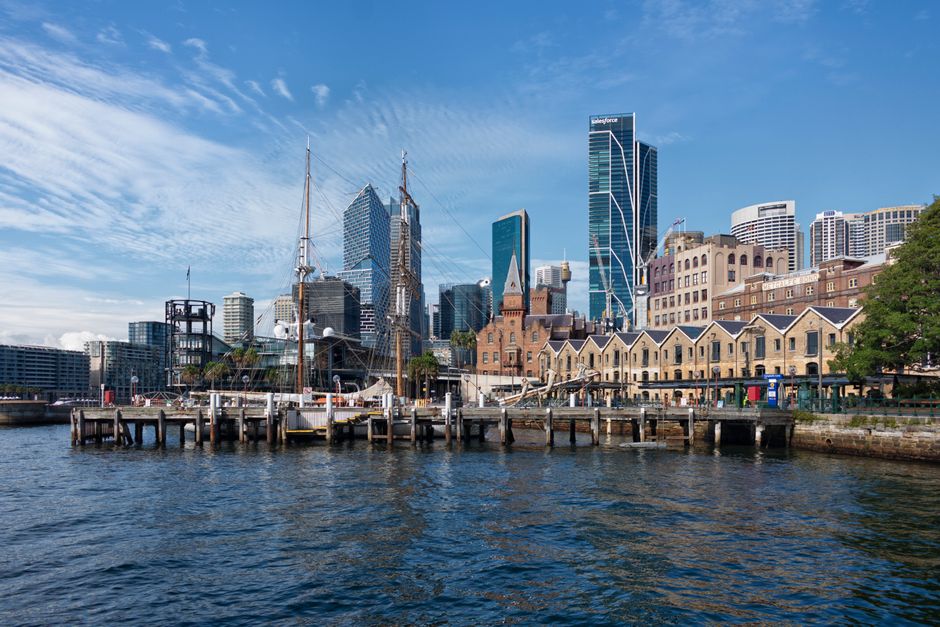
Demand for coworking memberships in Sydney surged 34 percent in the first half of 2026, outpacing every other major Australian capital, according to figures released last month by the Property Council of Australia. The city's professional class is no longer treating shared office space as a stopgap. For a growing number of workers, it's the permanent plan.
The shift matters now because a wave of return-to-office mandates — many requiring three or four days per week in person by September — is colliding with a housing market that has pushed young professionals further from the CBD than ever before. Commuting from Penrith or Campbelltown to Martin Place five days a week isn't viable for everyone. That gap is exactly what the coworking industry is moving to fill, and the options available in 2026 are substantially more sophisticated than the hot-desking sheds of five years ago.
The heaviest concentration of coworking space remains in the CBD corridor running from Wynyard down to Surry Hills, but the growth edge has shifted. WeWork's Elizabeth Street location — restructured after the company's 2023 bankruptcy proceedings and relaunched under new management in mid-2025 — is now reportedly operating at 91 percent occupancy. Spaces like Hub Australia on Clarence Street and Fishburners at the UTS precinct on Harris Street, Ultimo, have both expanded their membership tiers since January to accommodate demand from professionals who want something between a café and a corporate lease.
Further west, the Western Sydney Innovation Hub at Parramatta Square added 120 dedicated desks in March specifically targeting tech and finance workers priced out of inner-city memberships. A hot desk in Parramatta currently runs around $35 to $45 per day, compared with $65 to $85 for equivalent space in the CBD. For job seekers building a professional presence without an employer's address behind them, that $30-a-day difference compounds quickly.
Randwick and Chatswood have also emerged as legitimate suburban coworking nodes. The Cowork Randwick space near Belmore Road opened a second floor in April, and at least two new operators are understood to be scouting Chatswood Chase's commercial precinct following the council's rezoning approval in late 2025.
A March 2026 survey by RMIT's Future of Work Institute found that 61 percent of Australian remote workers using coworking spaces reported higher productivity than working from home, but only 38 percent said their employer reimbursed any portion of the membership cost. That reimbursement gap is a live negotiating point. Professionals changing jobs in 2026 should treat a coworking stipend — typically $300 to $500 per month — as a legitimate workplace benefit to request, on par with laptop allowances or phone plans.
Job seekers should also be aware that several large Sydney employers, including firms in the Barangaroo South precinct, have begun listing "flexible location" arrangements as standard rather than exceptional in their job postings. That language almost never means fully remote. It usually means the employer expects you to be somewhere professional and connected, even if it isn't their office. Walking in to an interview and explaining you work from a credible coworking space lands better than saying you work from your kitchen.
The practical calculus for professionals right now: if your employer has not yet formalised a return-to-office policy, expect one before the end of the third quarter. Sydney's major law firms, banks and consulting groups have all signalled intent to firm up attendance expectations by October. Getting a coworking membership sorted before that deadline — rather than scrambling after — puts you in a better negotiating position and gives you a fixed professional address that shows up on LinkedIn and correspondence. The window to shape your own hybrid arrangement on your terms is narrowing, but it has not closed.
How does this story make you feel?
Spread the word
About this article
Published by The Daily Sydney
Daily brief
Free, in your inbox before 7am. Weekdays.
More in tech