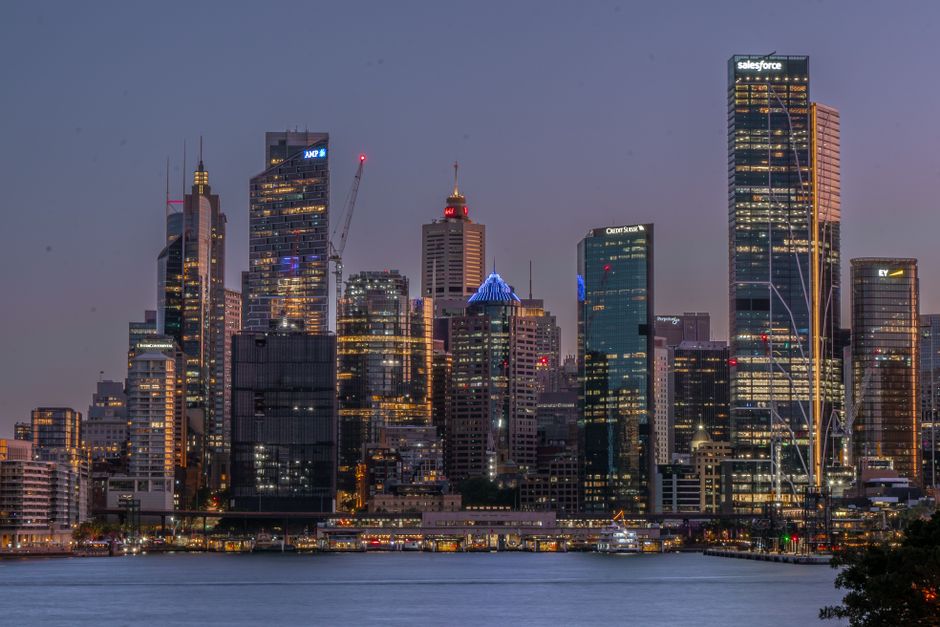
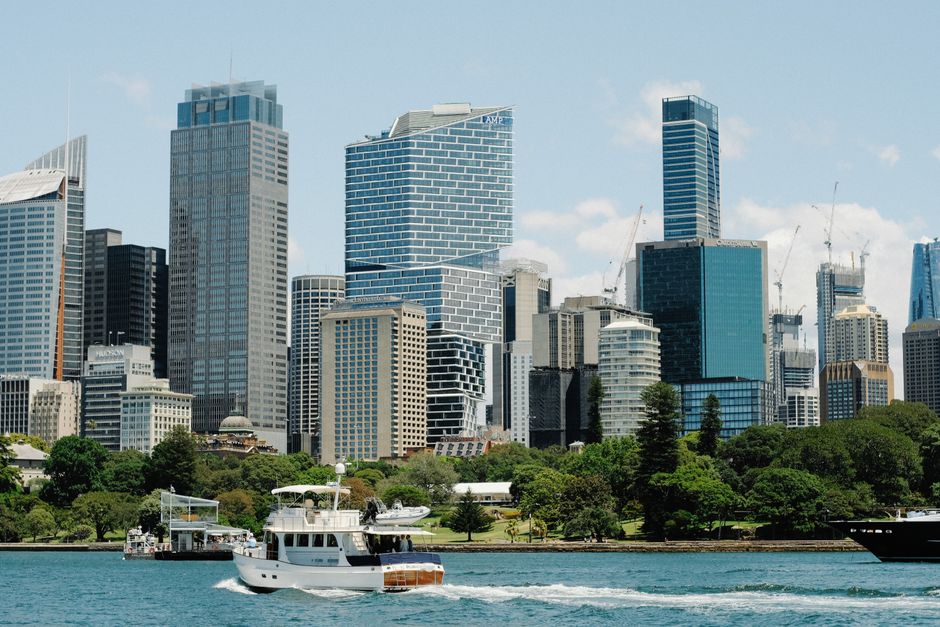
Australian clean energy startups raised a record $1.4 billion in the first half of 2026, with firms headquartered in Greater Sydney capturing roughly 38 percent of that total — the highest share the city has claimed since the sector began tracking regional breakdowns in 2019. The figures, compiled by the Clean Energy Finance Corporation and released last week, confirm what fund managers along Pitt Street have been quietly saying for months: the money is moving fast, and Sydney is where a lot of it is landing.
The timing is not accidental. The federal government's $15 billion National Reconstruction Fund, which earmarked a dedicated clean-tech stream in late 2024, has begun disbursing at scale. At the same time, the New South Wales government's Net Zero Industry and Innovation Program — now in its third funding round — is co-investing with private capital in a way that reduces early-stage risk enough to bring institutional money off the sidelines. Superannuation funds, which collectively manage more than $3.9 trillion in Australian retirement savings, have started treating green infrastructure as a core allocation rather than an ESG gesture.
Where the Capital Is Actually Going
The deals clustering around the Ultimo and Pyrmont tech precinct tell a specific story. Sydney-based battery-storage developer Ento Systems closed a $62 million Series B in May, co-led by Macquarie Asset Management and Singapore's Temasek. Grid-edge software firm Solace Energy, which runs its engineering team out of a converted warehouse on Harris Street, Ultimo, picked up $28 million from a syndicate that included AGL Energy's venture arm. Neither company was household-name material eighteen months ago.
Further west, the Western Sydney Aerotropolis — the 11,200-hectare development anchored around the new Nancy-Bird Walton Airport at Badgerys Creek — is attracting green manufacturing interest that would have seemed speculative as recently as 2023. The NSW government confirmed in June that three clean-hydrogen component manufacturers have signed heads-of-agreement to establish facilities inside the aerotropolis's advanced manufacturing precinct. The combined capital expenditure is estimated at $340 million over five years.
CSIRO's Energy Business Unit, based at its Rhodes campus on the Parramatta River, is acting as a technical validator for several of these deals — a role that gives nervous institutional investors a degree of scientific due diligence they can point to in their own reporting frameworks. The organisation ran 14 commercial partnership assessments in the first quarter of 2026 alone, up from six in the same period last year.
The Numbers Behind the Momentum
Benchmark data from Bloomberg NEF puts Australia's levelised cost of utility-scale solar at around $A48 per megawatt-hour as of June 2026 — competitive with any new gas peaker plant. That cost curve has not plateaued. Analysts at Frontier Economics, whose Sydney office sits on King Street in the CBD, are modelling a further 12 to 18 percent reduction by 2029 as panel efficiency improvements compound with local manufacturing scale.
Venture returns are following. The Clean Energy Finance Corporation reported an internal rate of return of 9.2 percent across its equity portfolio for the 2024-25 financial year — comfortably above the 6.5 percent benchmark it originally projected when the portfolio was structured in 2013. That track record is doing recruiting work for the sector; three former partners from Blackbird Ventures and AirTree have moved into dedicated green-tech funds since January.
For founders still trying to navigate the funding environment, the practical picture is this: the NSW government's GenEnergy Accelerator program, run out of the Sydney StartUp Hub on Clarence Street, is accepting applications for its fourth cohort until August 15. The program offers $250,000 in non-dilutive grant funding alongside six months of structured investor access. Separately, the Australian Renewable Energy Agency has a rolling expression-of-interest process for projects above $5 million — and industry advisers say response times have dropped significantly as ARENA added twelve new assessment staff in April. The capital exists. The pipeline of projects willing to meet institutional-grade reporting standards is what funds say they are actually short of.