Sydney's Startup Money: Where the Investment Is Actually Going Right Now
Venture capital is still flowing into Sydney's tech precincts, but the numbers tell a more complicated story than the pitch decks suggest.
Venture capital is still flowing into Sydney's tech precincts, but the numbers tell a more complicated story than the pitch decks suggest.
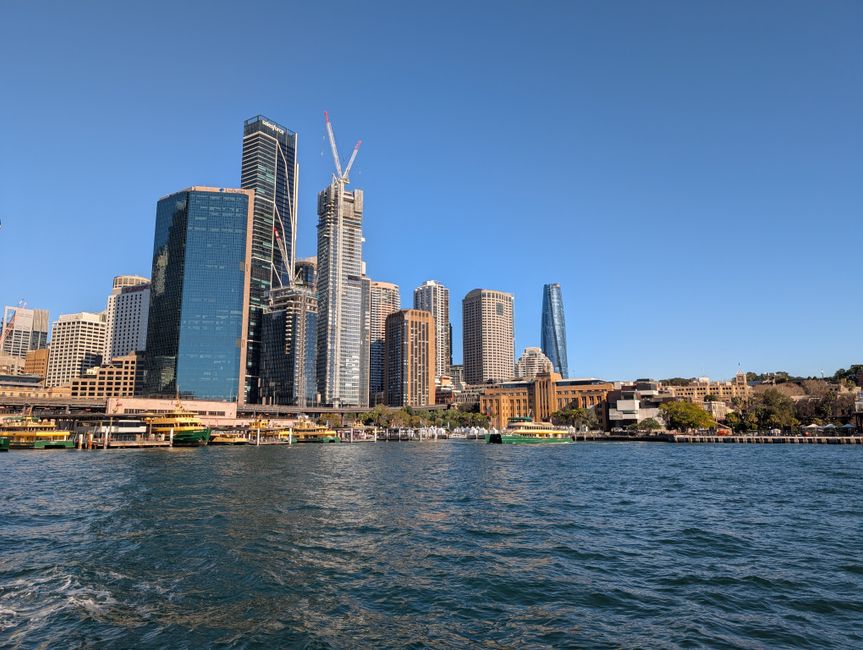
Sydney's startup ecosystem pulled in $1.4 billion in venture capital during the first half of 2026, according to figures compiled by Cut Through Venture, but the distribution of that money is narrowing fast. Three sectors — artificial intelligence infrastructure, clean energy tech, and defence-adjacent software — absorbed roughly 68 cents of every dollar raised. Everything else is competing for the scraps.
That concentration matters because Australia's broader economic environment is turning hostile to speculative capital. The Reserve Bank held the cash rate at 3.85 percent through its June meeting, and construction cost inflation is still running above 6 percent annually, squeezing founders who need physical space to build hardware or run data-intensive operations. Meanwhile, the scramble for industrial land to house AI datacentres — a pressure now being tracked by the Grattan Institute — is pushing lease prices in Western Sydney's Yennora and Moorebank logistics corridors to records, crowding out the mid-tier manufacturing and deep tech startups that once called those precincts home.
Walk through the Australian Technology Park in Eveleigh on any given weekday and the energy feels real — Cicada Innovations, which manages roughly 4,500 square metres of deep tech workspace there, reported a 94 percent occupancy rate through Q1 2026. But talk to founders outside that precinct bubble and the picture looks different. Startups in the $500,000 to $3 million raise bracket — the so-called Series A gap that has plagued Australian tech for a decade — are finding domestic institutional investors more cautious than at any point since 2020.
The anxiety traces partly to what happened in Melbourne. That city's property market deterioration after the Victorian budget rattled family office investors who had been quietly recycling real estate gains into early-stage tech bets. Some of that capital was finding its way north to Sydney deals. Less of it is now. One Sydney-based fund manager, speaking without attribution, described the current mood among high-net-worth investors as "forensic" — meaning due diligence timelines that once ran six weeks are now stretching to four months.
The federal government's National Reconstruction Fund, which opened its advanced manufacturing loan window in March 2026, has received 340 expressions of interest nationally. NSW-based applicants account for about 29 percent of that pipeline, with a cluster of them coming from firms operating in the Westmead Health and Innovation Precinct and the planned Rouse Hill advanced manufacturing hub. The NRF's minimum loan threshold of $10 million, however, makes it structurally irrelevant to most startups below Series B.
The practical read for Sydney founders is this: sovereign and institutional money is available, but it is flowing toward companies with defence, energy transition, or AI infrastructure credentials. The $1.5 billion AUKUS innovation fund announced by the Albanese government earlier this year is beginning to attract dual-use tech startups — firms building software or sensing technology that has both commercial and defence applications — to precincts near Randwick and Macquarie Park, where proximity to UNSW and Macquarie University research labs gives them credibility with government procurement officers.
Angel and seed-stage capital is thinner. Sydney Seed Fund, which makes $50,000 to $150,000 bets into very early companies, closed its sixth vehicle at $4.2 million in May — smaller than its fifth, which closed at $5.8 million in 2024. The fund's managers have pointed publicly to the compression of the angel investor base as family office wealth gets tied up in longer-due-diligence cycles.
Founders raising in the next six months should expect two things. First, investors will want to see a clearer line to revenue within 18 months, not 36 — the patience for long burn runways has evaporated. Second, location still signals credibility in ways that remote-first pitches do not fully overcome; desk space at Fishburners in the CBD or a residency at the Stone & Chalk hub at the Australian Technology Park in Eveleigh will carry more weight in term-sheet conversations than it did three years ago. The money is there. The conditions to get it have simply become much more specific.
How does this story make you feel?
Spread the word
About this article
Published by The Daily Sydney
Daily brief
Free, in your inbox before 7am. Weekdays.
More in Business