Sydney Startups Caught in Global AI Squeeze as Data Centre Boom Reshapes the Innovation Map
Rising industrial land costs and a worldwide crackdown on AI-generated content are hitting Sydney's tech precinct harder than founders expected.
Rising industrial land costs and a worldwide crackdown on AI-generated content are hitting Sydney's tech precinct harder than founders expected.
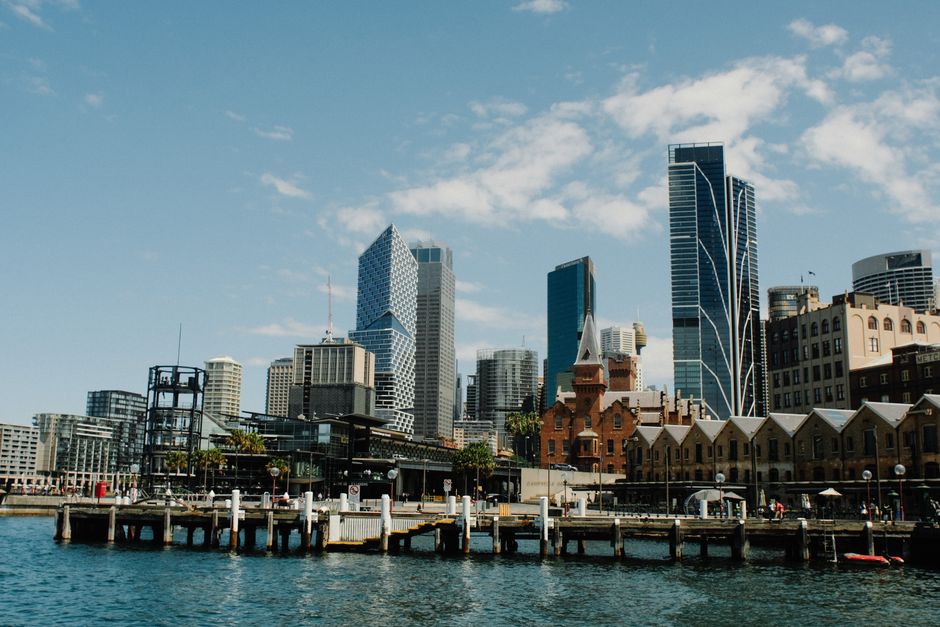
The two forces hammering startup ecosystems globally — surging demand for AI infrastructure and an accelerating war on synthetic content — arrived in Sydney this week with unusual force. Industrial land prices across the city's western corridor have climbed roughly 34 per cent since January 2025, according to figures from CBRE's June 2026 industrial report, driven largely by hyperscale data centre operators competing for sites in Eastern Creek and Kemps Creek. For the founders who need affordable floor space to grow, the arithmetic is turning ugly fast.
The timing matters because Sydney is mid-experiment. The New South Wales Government committed $380 million to the Tech Central precinct in Haymarket and Ultimo in its 2024–25 budget, betting that concentrating talent around Central Station would produce a durable innovation district on the model of London's Silicon Roundabout. That plan was drawn up before AI infrastructure appetite began eating the city's industrial land supply whole.
Inside Tech Central, the picture is mixed. Atlassian's new headquarters on 8-22 Ultimo Road opened last year and remains a gravitational anchor, drawing a constellation of smaller firms to co-working spaces along Botany Road and into the CarriageWorks precinct in Eveleigh. Stone & Chalk, the fintech and deep-tech hub at 477 Pitt Street, reported a waiting list for desks earlier this year. Rents for fitted-out creative office space in the Haymarket pocket are now running between $950 and $1,150 per square metre annually — up from roughly $820 two years ago — pricing out seed-stage companies that once treated the area as a natural first home.
The global AI content crackdown is adding a different kind of cost. Meta's sweeping removal of millions of accounts tied to AI-generated impersonation has rattled Australian social commerce startups that built audience-acquisition strategies on creator partnerships. Several Sydney-based firms operating from the ATP Innovation Hub in Eveleigh are now auditing their influencer supply chains after discovering third-party agencies had used synthetic accounts to inflate reach metrics. The compliance work alone is expensive: one founder in the precinct described spending three weeks and roughly $40,000 in legal and technical fees to verify the provenance of a single campaign's audience data.
The data centre construction boom is not purely a threat. Startups building the software layer on top of AI infrastructure — observability tools, energy management platforms, edge-compute orchestration — are finding investor appetite stronger than at any point since 2021. Sydney Startup Hub on Clarence Street recorded its highest number of new member applications in Q2 2026, up 28 per cent on the same period last year, with AI-infrastructure-adjacent companies accounting for nearly half the intake.
The risk is concentration. If the precinct tilts too heavily toward capital-intensive AI plays, the broader diversity that makes an innovation district durable — hardware, biotech, climate tech, creative industries — can thin out quickly. Experts watching the sector point to the experience of San Francisco's SoMa neighbourhood, where a similar infrastructure boom between 2019 and 2022 gradually squeezed out the mid-tier studios and design firms that had given the area its texture.
For founders navigating the next six months, the practical calculus is shifting. Locking in longer leases before any further rent escalation makes sense for companies with at least 18 months of runway. Those without it are increasingly looking at Liverpool and Parramatta, where the Western Sydney Innovation Corridor program offers subsidised tenancies at significantly lower rates — sometimes below $600 per square metre — as part of the state government's effort to distribute the innovation economy beyond the CBD fringe. The corridor's next expression-of-interest round opens in September 2026. Given what's happening to land prices closer to the city, many founders who dismissed western Sydney 18 months ago are now taking a second look.
How does this story make you feel?
Spread the word
About this article
Published by The Daily Sydney
Daily brief
Free, in your inbox before 7am. Weekdays.
More in Business