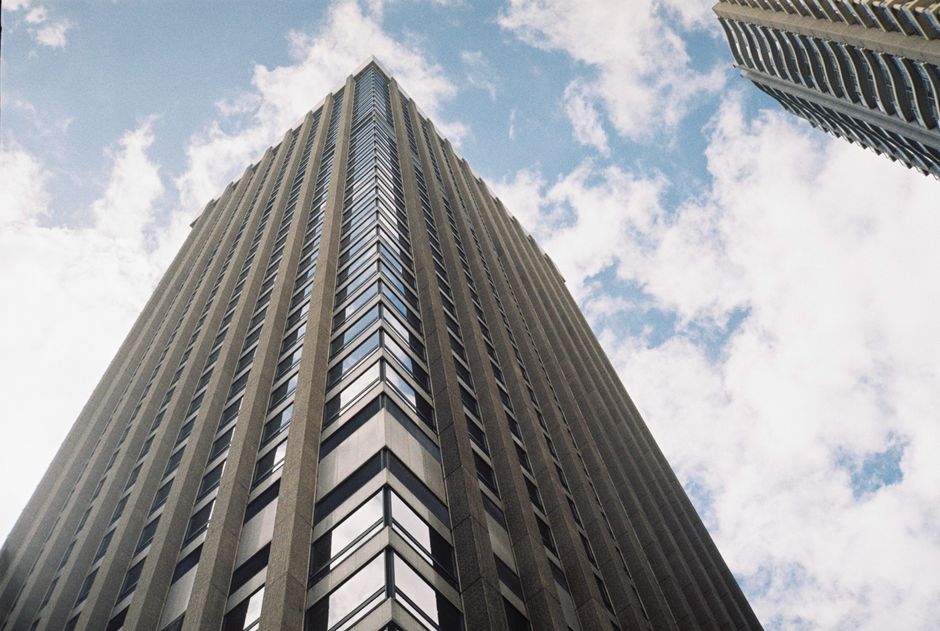
Sydney's CBD office vacancy rate has crept above 13 per cent, and the landlords along George Street and in the Barangaroo precinct are having a harder conversation with their lenders than at any point since the 2020 lockdowns. The trigger is no longer just hybrid work — it is the intersection of global capital flows, AI infrastructure demand, and a domestic budget environment that has spooked the investor class propping up the broader property sector.
The pressure matters right now because several forces are hitting simultaneously. Institutional money that might normally cycle from residential into commercial is sitting on its hands. In Melbourne, auction clearance rates have fallen sharply after the state budget, and some of that capital was always dual-listed, looking at Sydney office assets as an alternative. When that alternative pool shrinks, rents get tested. Meanwhile, global tech firms racing to lock up land for AI data centres — a trend documented by infrastructure analysts throughout June — are competing directly with freight logistics operators and, increasingly, with mid-tier commercial developers who had been eyeing Western Sydney sites near the Nancy-Bird Walton Airport corridor.
Ground-Level Pressure From Parramatta to the Rocks
The divergence between premium and secondary stock is the defining story inside Sydney's office market in mid-2026. Knight Frank's most recent survey, published in late June, put the prime CBD vacancy rate at around 10.2 per cent, while B-grade stock in suburbs like North Sydney and St Leonards pushed closer to 18 per cent. Landlords at 1 Farrer Place and the tower cluster around Martin Place can still command gross face rents near $1,400 per square metre annually. Owners of older 1980s-era buildings in Parramatta's Church Street corridor are cutting incentive packages to 30 per cent or higher just to keep floors occupied.
Mirvac, which manages a substantial slice of the premium portfolio including the EY Centre at 200 George Street, has publicly leaned into tenant experience upgrades — end-of-trip facilities, concierge services, sustainability ratings — as the lever to justify those headline rents. Dexus, with major holdings in the Grosvenor Place tower at 225 George Street, reported in its fiscal year guidance that average incentives across its Sydney portfolio had widened by roughly 2 percentage points year-on-year. That is a real cost to distributions and it lands directly on superannuation funds that hold these assets through listed REITs.
The AI Land Grab Complicates the Picture
The competition for industrial and semi-industrial land is reshaping what was already a constrained market. Sites within 40 kilometres of the CBD that commercial developers once targeted for mixed-use conversion — think the Artarmon industrial strip or parts of Mascot near the old airport industrial estate — are now being assessed by hyperscale data centre operators. Microsoft and NextDC have both been active in securing Sydney-basin sites, and planning approval timelines under the NSW Department of Planning's State Significant Development pathway have not shortened to match that urgency. The result is that some secondary office conversion projects, which would have absorbed B-grade supply and tightened vacancy, are simply not proceeding.
For businesses renewing leases in the next 12 months, the practical read is that leverage exists — but only in the right postcodes. A company looking at 2,000 square metres in North Sydney's Miller Street precinct has genuine negotiating room on incentives and fit-out contributions. A firm chasing 500 square metres of premium Barangaroo space will find the landlord rather less accommodating. The NSW Government's own footprint decisions matter here too: the $1.2 billion train manufacturing commitment anchored in the Hunter announced this week will shift some public sector employment weight toward Newcastle, but the corresponding Sydney-based administrative and contracting offices are likely to expand, adding demand pressure at the premium end of the market late in 2026 and into 2027.
Businesses that treat lease renewals as an afterthought — signing three-month holdovers, deferring decisions — are running out of runway. The window where landlord desperation keeps incentives elevated is narrowing at the premium tier. At the secondary tier, it may stay open longer than anyone wants to admit.