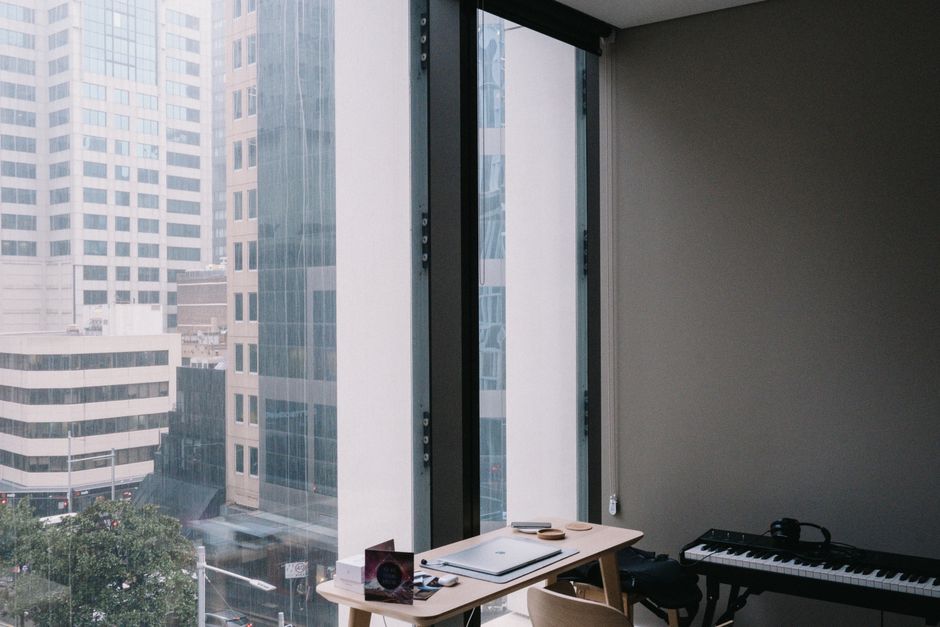
Sydney's commercial property market is facing a structural reckoning. Vacancy rates in the CBD hit 13.2 per cent in the June quarter, according to Property Council of Australia figures — the highest in more than two decades — while a parallel land grab by hyperscale data centre operators is driving industrial rents in the city's west to record levels, crowding out the warehousing and logistics tenants who once anchored those precincts.
The timing matters. Globally, 2026 has become the year that post-pandemic office adjustments have stopped looking temporary and started looking permanent. Major landlords in New York, London and Singapore are slashing face rents or converting towers to residential. What happens in those markets doesn't stay there: the same institutional funds that own skyscrapers on Collins Street in Melbourne and Martin Place in Sydney are repricing risk across their entire portfolios simultaneously. Melbourne's investor exodus — accelerated by recent state budget land tax changes — is already bleeding confidence across the Tasman and into Sydney boardrooms.
The AI Factor Scrambling the Outer Suburbs
The more immediate disruption for Sydney may be coming from the west, not the east. Demand for AI data centres is consuming vast swathes of industrial land across Kemps Creek and Horsley Park, near Penrith, where sites capable of hosting 100-megawatt-plus facilities are increasingly rare. Experts are warning that competition between data centre operators, freight logistics companies and residential developers for the same zoned land is becoming acute — and inflationary. Industrial rents in the Western Sydney Industrial Precinct rose roughly 18 per cent over the 2025 calendar year, according to Colliers research, and agents say there is no sign of that pressure easing.
That has a direct knock-on effect for ordinary Sydney businesses. Distribution companies, light manufacturers and trade suppliers who relied on affordable outer-suburban industrial space are being displaced. Some are moving further out toward Badgerys Creek and the new Western Sydney Airport precinct, adding freight costs and complexity. Others are consolidating or exiting the Sydney market entirely. The irony is sharp: the technology sector's infrastructure appetite, fuelled by global AI investment, is making the physical economy of western Sydney more expensive to operate.
CBD Landlords Dangling Incentives They Once Would Have Laughed At
Back in the CBD and its immediate surrounds, the picture for office landlords is one of creative desperation. Buildings along George Street and around Circular Quay that once commanded gross rents above $1,400 per square metre are now offering incentive packages — fit-out contributions, rent-free periods, flexible break clauses — that effectively reduce the net cost to tenants by 35 to 40 per cent. Mirvac's 55 Pitt Street development, due for completion later this year, is leasing into that headwind. Dexus, which manages some of Australia's largest CBD office towers, flagged in its most recent investor update that like-for-like income across its Sydney portfolio remained under pressure through the first half of 2026.
North Sydney is a cautionary tale. The suburb lost a wave of anchor tenants when the Victoria Cross Metro station construction upended the precinct; recovery has been slow, with vacancy still above 20 per cent on Miller Street. The Parramatta CBD, once touted as the certain beneficiary of westward decentralisation, has absorbed some of that demand, but leasing volumes remain well below the projections developers used to justify tower approvals three years ago.
For Sydney businesses making real estate decisions right now, the calculus is uncomfortable but the direction is clear. Tenants hold significant leverage — arguably more than at any point since the early 1990s recession. Companies willing to commit to five-year terms in quality buildings are extracting fit-outs and rent-free periods that would have been unthinkable in 2021. The risk is locking in at the wrong moment: if data centre construction and the AI infrastructure build-out does stoke broader inflation, interest rates could stay higher for longer, prolonging the pain for leveraged landlords while also dampening the economic activity that fills office floors in the first place. The global forces at work here are not abstract. They are writing leases — and ending them — in Sydney every week.