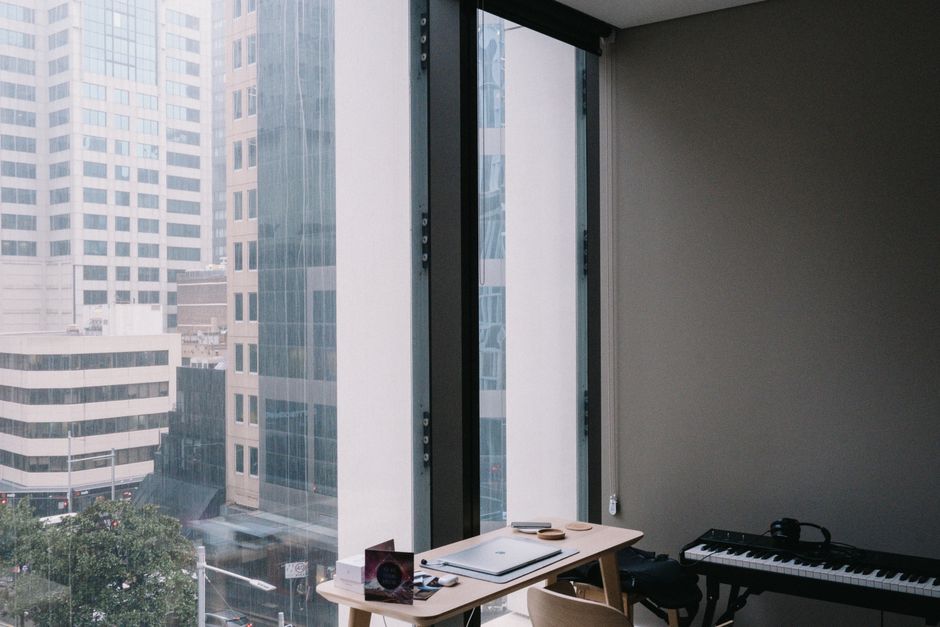
Vacancy rates in Sydney's CBD office market have hovered near 12 per cent for the better part of eighteen months, and landlords who once had waiting lists are now offering fitout contributions and rent-free periods stretching to twelve months. That pain is someone else's opportunity. A growing cohort of mid-size professional services firms, tech companies and co-working operators are locking in leases — and in some cases buying outright — at terms that would have been unthinkable in 2021.
The timing matters because several forces are converging at once. Melbourne's investor exodus, driven by the Victorian government's land tax changes, is redirecting capital northward. Meanwhile, the scramble for industrial land around Kemps Creek and Eastern Creek — driven by demand for AI data centre sites — is pushing logistics and warehouse tenants to look harder at repurposed commercial stock. Sydney's fringe office markets are catching the overflow.
The Suburbs Doing the Heavy Lifting
The clearest evidence is in the city fringe and inner-west corridors. Along Harris Street in Pyrmont, at least four floor plates that sat dark for most of 2024 were leased in the first quarter of 2026, according to leasing records filed with the NSW Valuer General. The tenants include a mid-tier accounting network and two separate software consultancies. Further south, the St Peters and Alexandria pocket — long a mixed industrial and creative-office zone — recorded a 9 per cent uptick in leasing enquiries in the six months to May 2026, per figures published by Colliers' Sydney office.
Macquarie Park, the northern corridor that anchors a cluster of pharmaceutical and technology tenants including Cochlear's Australian headquarters, is also seeing renewed activity. Incentives there have started to edge back — from peaks of 35 to 40 per cent gross face rent in mid-2025, landlords are now reporting incentives closer to 28 per cent as deals accelerate. That compression, small as it sounds, is the canary. It signals the window for maximum tenant leverage is narrowing.
Co-working operators have been particularly aggressive. The Australian arm of IWG, which trades locally under the Regus and Spaces brands, signed two new management agreements in Sydney's North Shore submarket in June — one on Pacific Highway, St Leonards, another near Chatswood Chase. Both deals involved the operator taking on otherwise vacant floors under a revenue-share model rather than a conventional head-lease, a structure landlords resisted just three years ago.
What the Numbers Actually Say
The Property Council of Australia's January 2026 Office Market Report put Sydney CBD total vacancy at 11.8 per cent, with sub-lease availability — historically the most distressed category — still elevated at 2.3 per cent of total stock. That figure has not recovered to pre-pandemic norms below 1 per cent. For tenants, it means genuine choice. For buyers with equity, it means some secondary-grade buildings on streets like Clarence Street and York Street in the CBD are trading at discounts of 20 to 30 per cent off 2019 valuations, according to transaction data compiled by JLL through May 2026.
The buyer pool has also changed. Offshore institutions that dominated CBD acquisitions a decade ago are largely sitting out. Domestic unlisted funds and private syndicates — some of them redirected capital from Melbourne residential plays — have stepped into that gap, acquiring assets in the $20 million to $80 million range where competition is thinnest.
Firms hunting space right now should move before the September quarter. Several large leases — including one rumoured to involve a federal government agency taking back-office space near Central Station — are expected to absorb meaningful floorspace in Q3. When sub-lease stock starts to tighten, the incentive packages currently on the table will compress fast. Buyers in the secondary market face a similar calculus: the distressed sellers with genuine motivation to close are still present, but the pipeline of forced sales from refinancing pressure will thin as interest rate settings ease. The window is open. It will not stay that way indefinitely.