Sydney's Job Market Is Shifting Beneath Your Feet — Here's What You Need to Know
From Parramatta to the CBD, the forces reshaping employment in 2026 will hit your household budget before they hit the headlines.
From Parramatta to the CBD, the forces reshaping employment in 2026 will hit your household budget before they hit the headlines.
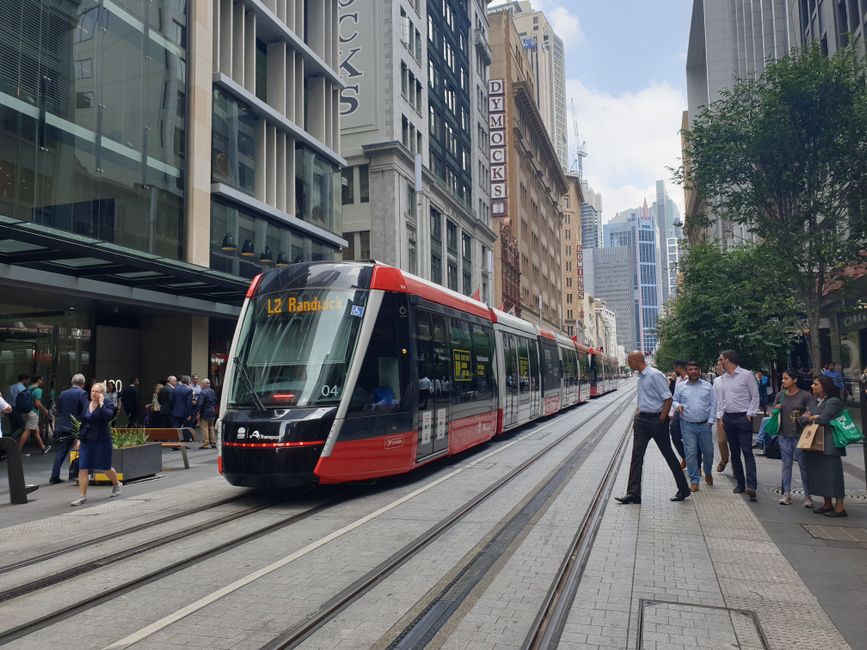
Sydney's unemployment rate sits at 4.3 per cent as of June 2026, up from 3.7 per cent a year ago, and the gap between where the jobs are and where workers expect to find them has rarely been wider. For ordinary residents — renters in Marrickville, mortgage-holders in Penrith, graduates sharing flats in Newtown — that shift is already showing up in slower wage growth, fewer hours, and a labour market that looks healthy on paper but feels precarious on the ground.
The timing matters. A cooling property market has removed the equity buffer that many Sydney households treated as a financial safety net. Melbourne's investor exodus has rattled confidence across state borders, and property clearance rates in Sydney's western and south-western corridors have also softened through June. When household wealth feels thinner, spending contracts, and when spending contracts, employers start trimming rosters. That chain reaction is already visible in retail foot traffic data along Pitt Street Mall and George Street, where several mid-market chains have quietly reduced casual staff hours since Easter.
The bright spots are specific and worth knowing. The NSW government's $1.2 billion commitment to train manufacturing in the Hunter Valley, announced this week by Premier Chris Minns, will eventually ripple into supply chains serviced from suburban Sydney. Engineering consultancies in Macquarie Park and logistics firms operating out of the Moorebank Intermodal Precinct in Liverpool are already fielding increased inquiries about subcontracting work. Those jobs are real and, critically, they are not remote-friendly — they require bodies on site.
The tech and AI sector is a more complicated story. Data centre construction is booming along the Western Sydney corridor, particularly around Eastern Creek and Kemps Creek, where several hyperscale facilities are under development. The Infrastructure Australia pipeline puts committed data centre investment in greater Sydney at over $6 billion through to 2029. The catch, as economists at the University of Sydney's School of Economics flagged in research published in May, is that data centres are land-hungry but not particularly people-hungry once built. Construction creates a surge of employment; operations sustain far fewer permanent roles. A resident watching a data centre go up near their suburb should not expect a matching surge in local job ads twelve months later.
At the same time, Meta's global crackdown on AI-generated fake accounts — reportedly removing millions of profiles in recent weeks — is starting to squeeze Sydney's fast-growing creator economy. Marketing agencies on Riley Street in Surry Hills and content studios around Alexandria have built entire business models around social media reach. When platform trust erodes and ad buyers grow cautious, the freelancers and sole traders who service those agencies are the first to lose contracts. The Fair Work Commission recorded a 14 per cent increase in unfair dismissal applications from NSW gig and contract workers in the March 2026 quarter compared with the same period in 2025.
Three practical points for Sydney residents navigating this period. First, casualisation is accelerating in hospitality and retail — if you work in those sectors, document your hours carefully. The NSW Industrial Relations Commission has been active in recovering unpaid entitlements, but workers need records to lodge claims. The Commission operates a free advice line out of its offices at 1 Oxford Street, Darlinghurst.
Second, retraining support is available and underused. TAFE NSW's Western Sydney campus at Nirimba in Quakers Hill has expanded its engineering and construction trade short courses for 2026, with fee-free places under the federal government's Fee-Free TAFE program still available in several high-demand qualifications as of this month. The cut-off for July intake is July 18.
Third, watch your discretionary spending closely over the next two quarters. When investors pull back from property and construction pipelines thin, knock-on job losses in trades, real estate services, and associated retail follow within six to nine months. Sydney has been through this cycle before. Residents who build a cash buffer now will have more options when the next round of sector-specific layoffs lands on the front page.
How does this story make you feel?
Spread the word
About this article
Published by The Daily Sydney
Daily brief
Free, in your inbox before 7am. Weekdays.
More in Business