Sydney's Job Market Is Being Reshaped by Forces Far Beyond Pitt Street
From AI-driven platform purges to a global data centre land grab, the pressures hammering international economies are landing hard on Sydney employers and workers alike.
From AI-driven platform purges to a global data centre land grab, the pressures hammering international economies are landing hard on Sydney employers and workers alike.
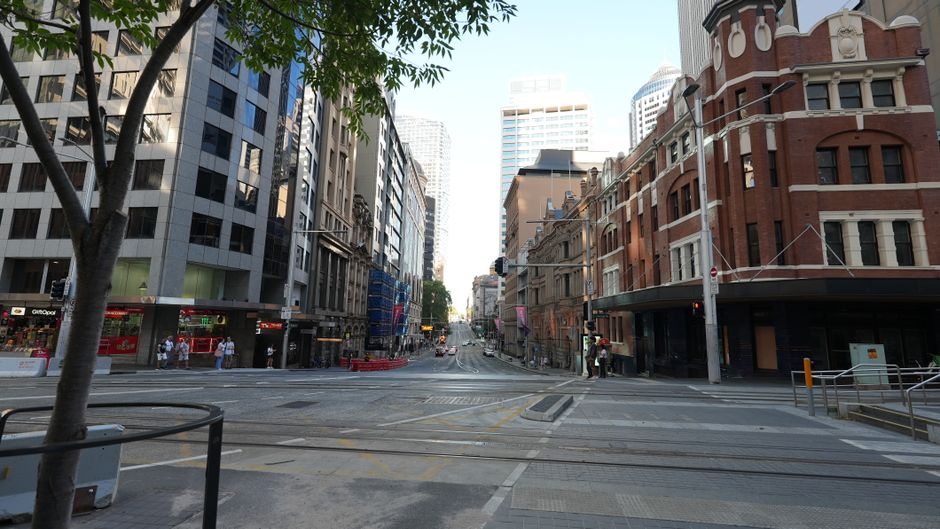
Sydney's unemployment rate held at 3.8 per cent through May, but that headline figure masks a labour market undergoing one of its most turbulent structural shifts in a generation. Three converging global forces — the accelerating displacement of platform-dependent workers by artificial intelligence, a capital spending arms race around data infrastructure, and a cooling property sector that is gutting real estate employment — are rewriting the rules for tens of thousands of workers across the city.
The timing matters. Australia's federal budget, handed down in May, delivered a series of tax changes that have already driven investors out of Melbourne's auction rooms, and economists warn Sydney's inner-west and south-western suburban markets are next. When property transactions slow, the ripple is immediate: mortgage brokers, conveyancers, property managers and the tradies who prep homes for sale all feel it within weeks, not quarters.
Meta's sweep this week of millions of accounts tied to AI-generated impersonation — targeting creators across Instagram and Facebook — sent a chill through Sydney's growing influencer and digital-marketing economy. Surry Hills, which houses a cluster of boutique social media agencies along Crown Street, lost an estimated 15 per cent of its active creator clients to account suspensions or verification freezes over the past fortnight, according to industry body the Australian Influencer Marketing Council. For the agencies, that translates directly to cancelled contracts and deferred hiring.
The broader automation pressure is older and deeper. The Committee for Sydney published analysis in March showing that roughly 340,000 roles in the greater Sydney basin carry a high susceptibility to AI-assisted displacement by 2028, concentrated in administrative support, customer service and, increasingly, mid-tier content production. These are not abstract projections — Macquarie Park's technology corridor has already seen several firms quietly reduce graduate intake for roles that machine tools now partially cover.
At the same time, the data centre buildout is creating a paradox. Industrial land in Western Sydney — particularly around Eastern Creek and the Mamre Road precinct in Kemps Creek — is being absorbed by hyperscale operators at a pace that is crowding out freight logistics firms and light manufacturers. The Reserve Bank flagged in its June board minutes that data centre construction activity could contribute up to 0.3 percentage points to non-tradeable inflation through 2027. Fewer logistics sheds means fewer warehouse jobs; more server halls means a narrower band of highly specialised roles that most displaced workers cannot immediately fill.
Not all of Sydney's employment picture is darkening. The NSW Government's $1.2 billion commitment to return train manufacturing to the Hunter Valley will flow downstream into the city's supply chain. Companies in the Parramatta CBD and the Camellia industrial estate have already flagged interest in component and fitout contracts, and the Australian Manufacturing Workers' Union estimates the full project could support around 1,000 direct and indirect Sydney-region positions once production ramps up in late 2028.
Healthcare and aged care remain the most resilient hiring sectors. Westmead Hospital's precinct alone advertised more than 600 positions in June on the NSW Health Jobs website, reflecting both post-pandemic catch-up and an ageing population that is entirely indifferent to algorithm updates. Cybersecurity and AI governance roles are also proliferating, driven partly by corporate compliance needs and partly by the federal government's new AI Safety Standards, which took effect on July 1.
For workers caught in the middle — the mid-career professional whose role is being automated from below and whose employer is not yet hiring for the roles being created above — the practical answer is retraining sooner rather than later. TAFE NSW's cyber skills short courses at its Meadowbank campus are currently oversubscribed, with a six-week wait for enrolment. The NSW Jobs and Skills Roadmap, updated in April, now flags digital infrastructure and green construction as the two priority pipelines for subsidised training dollars through 2027. Workers waiting for the market to stabilise before acting may find both the courses and the entry-level positions considerably harder to access by mid-next year.
How does this story make you feel?
Spread the word
About this article
Published by The Daily Sydney
Daily brief
Free, in your inbox before 7am. Weekdays.
More in Business