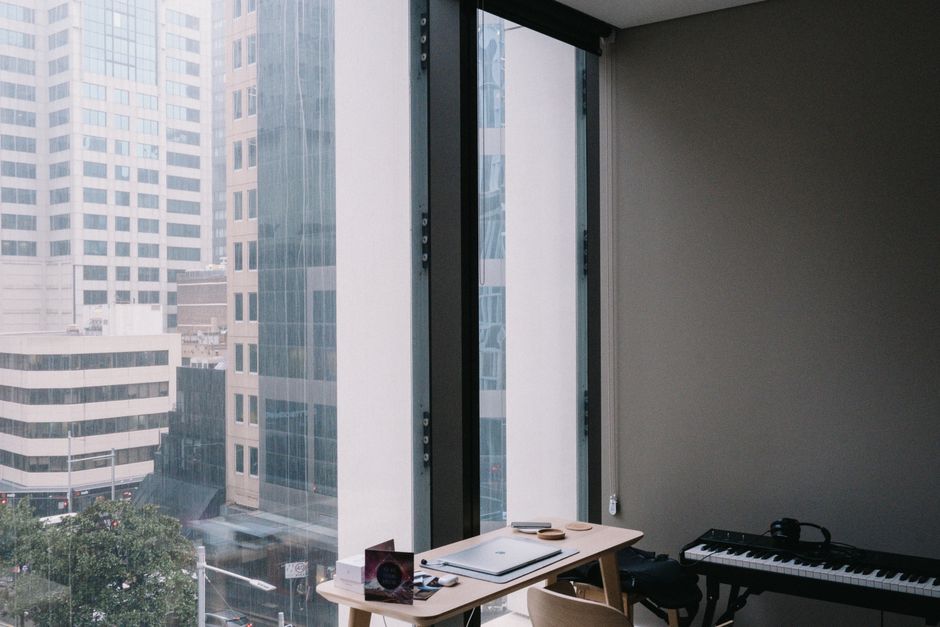
Selin Akar signed a 10-year lease on a 2,800-square-metre warehouse on O'Connor Street, Chippendale, in January 2025, when Sydney's CBD office vacancy rate was hovering near 12 per cent and every second think-piece declared the era of the corporate tower finished. Eighteen months later, her flexible workspace business, Groundwork Studios, is at 94 per cent occupancy and fielding a waitlist of more than 60 companies.
The timing looks prescient now. Sydney's commercial property market is fracturing along fault lines that reward operators who understand what workers actually want — not what CFOs assumed they wanted two years ago. National office vacancy data from the Property Council of Australia put Sydney's CBD at 11.4 per cent for the first half of 2026, still elevated by pre-pandemic standards, but the figures mask a sharper divergence: premium-grade space is being absorbed fast, while B-grade stock above the 15th floor of ageing Pitt Street towers sits dark.
The Fringe Bet Paying Off
Akar's pitch is not complicated. She charges member companies between $850 and $2,400 per desk per month depending on configuration, positions Groundwork as a genuine alternative to the corporate campus, and has focused exclusively on the inner-south fringe corridor — Chippendale, Surry Hills, Redfern — rather than chasing the prestige of Martin Place or Barangaroo. That decision is looking smarter by the quarter. Rents on the fringe are running roughly 30 to 40 per cent below comparable floor space in the CBD core, according to figures circulated by CBRE's Sydney office in its June 2026 market update, yet tenant demand on that strip has grown faster than anywhere else in the city over the past 12 months.
The broader pressure on commercial property is real and documented. Investors have pulled back sharply from Melbourne after the Victorian government's recent budget measures spooked the landlord class, and that anxiety is seeping into conversations in Sydney too. Meanwhile, demand for large industrial sites near Western Sydney Airport and along the Moorebank logistics corridor is being driven partly by AI data centre operators — a trend economists flagged this week as a potential inflationary risk that could also crowd out freight and housing uses. Office landlords in Sydney's core are caught between those two competing anxieties, watching capital rotate away from traditional assets.
Akar has avoided that squeeze by keeping her footprint flexible and her lease terms short-to-medium for members. Her 47 member companies range from a 3-person climate tech startup to a 60-person advertising agency that sublet its entire Surry Hills floor during the post-COVID restructure and never went back. That advertising firm now takes 28 dedicated desks at Groundwork — a fraction of its former fixed cost.
What the Numbers Say About the Shift
The Property Council's June data also showed that net absorption across Sydney's total office market was positive for the third consecutive quarter — 38,200 square metres absorbed in the six months to June 2026 — but the gains are concentrated in sub-1,500-square-metre tenancies. Large-format leases above 5,000 square metres remain rare. That pattern suits operators like Groundwork, which carved its Chippendale warehouse into modular bays ranging from four-desk studios to 40-person suites, all connected by shared amenity on a central floor.
The University of Technology Sydney's urban economics unit, based at the Broadway campus less than 800 metres from Groundwork's O'Connor Street site, published analysis in May 2026 suggesting inner-city fringe precincts with strong public transport links could absorb up to 15 per cent of displaced CBD office demand over the next three years as lease expiries accelerate through 2027 and 2028.
For businesses still locked into legacy CBD leases expiring in the next 24 months, the practical calculus is shifting. Full-floor commitments in towers off George Street or along Kent Street are repricing, with some landlords now offering rent-free periods of up to 12 months to secure tenants on five-year terms — incentives not seen at this scale since 2020. Those coming off lease should be testing the fringe market seriously before renewing. The desks are filling up faster than the towers, and the entrepreneurs who figured that out early are already charging waitlist premiums to prove it.