Sydney's Startup Ecosystem Is Shifting Fast — Here's What Founders Need to Know Now
Industrial land pressure, AI infrastructure competition, and a cooling property market are reshaping where Sydney startups can afford to build.
Industrial land pressure, AI infrastructure competition, and a cooling property market are reshaping where Sydney startups can afford to build.
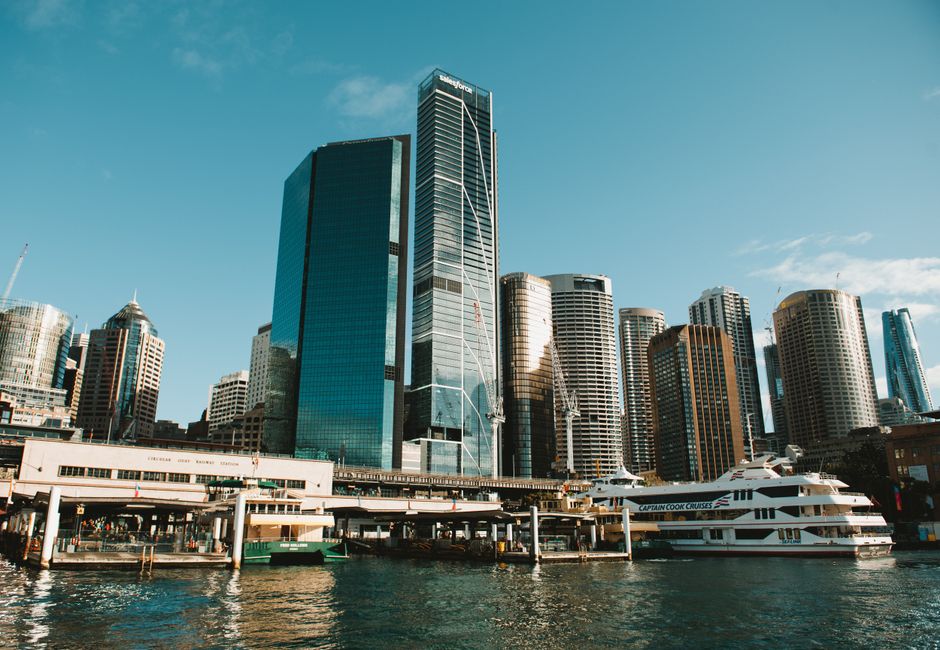
Sydney's innovation districts are under fresh strain in mid-2026, with industrial land prices surging past $1,200 per square metre in inner-west suburbs as data centre operators and logistics firms outbid the co-working and light-manufacturing tenants that typically anchor startup precincts. Founders and scale-ups hunting for affordable space are finding the window is closing quickly.
The pressure matters now because two forces are hitting simultaneously. AI infrastructure spending — accelerating sharply across New South Wales after several hyperscale operators flagged Australian expansion plans earlier this year — is absorbing industrial-zoned land that would otherwise feed a pipeline of affordable creative and tech workspace. At the same time, the broader commercial property market is wobbling, leaving smaller operators uncertain about lease terms and fit-out investment. The result is a squeeze that disproportionately hits early-stage businesses without the balance sheets to lock in long leases.
Alexandria and Erskineville, historically the spiritual home of Sydney's hardware and deep-tech startups, are seeing vacancy rates for sub-500-square-metre tenancies fall below 3 percent, according to leasing agents active in the corridor between Botany Road and Euston Road. Startups that banked on rolling short-term licences at hubs like Cicada Innovations — the deep-tech commercialisation precinct on Locomotive Street in Eveleigh — are being told the waitlist for permanent residency now stretches to early 2027.
Further west, the Parramatta startup scene is absorbing some of the overflow. Stone & Chalk's office at 169 Macquarie Street, Parramatta, has seen inquiry volume rise roughly 40 percent in the first half of 2026 compared with the same period last year, per figures shared with industry stakeholders in June. CoWork Me in North Parramatta is reporting similar trends. The shift is real, but it comes with a trade-off: distance from the Redfern-Surry Hills talent pool that many founders consider essential.
The NSW Government's $12 billion commitment to train manufacturing in the Hunter Valley, announced this week by Premier Chris Minns, is relevant here too. That contract will pull advanced-manufacturing skills and some capital equipment suppliers northward. Sydney-based startups in robotics, materials science, and industrial IoT should be thinking now about whether Hunter contracts represent a revenue opportunity — or a talent drain.
Property analytics firm PCA recorded Sydney-wide industrial vacancy at 1.6 percent in the March 2026 quarter, the tightest reading since 2018. Gross face rents for prime industrial space in the inner south hit $285 per square metre annually — up 18 percent year-on-year. For a 300-square-metre tenancy, that is an $85,500 annual rent before outgoings, a figure that strains the unit economics of a pre-revenue Series A company burning through an $800,000 runway.
Meta's decision this week to ban millions of accounts linked to AI-generated creator impersonation is a separate but pointed reminder for Sydney's growing cohort of AI product startups: platforms are moving aggressively on synthetic content, and any B2C product relying on user-generated social distribution needs to audit its compliance posture before the next platform policy update hits.
Practically, founders facing lease renewals in the next six months should do three things immediately. First, approach Landcom and the NSW Government's Sydney Startup Hub on Pitt Street about the subsidised tenancy pipeline — the program has underutilised capacity in the $35-to-$45 per square metre monthly range for qualifying early-stage companies. Second, model a Western Sydney option seriously; the Parramatta light rail opened new foot-traffic patterns that make the CBD-to-Parramatta commute genuinely manageable. Third, watch the Melbourne investor exodus closely — capital that has exited Melbourne residential is hunting yield, and some of it will land in NSW venture vehicles before the end of the 2026 calendar year, potentially loosening the funding environment that has been tight since late 2024.
The Sydney ecosystem has navigated tighter cycles before. The costs of the current squeeze are real, but the structural demand for innovation infrastructure — from government, enterprise and now AI operators — is not going away. The startups that map their space and capital strategy in the next 90 days will be better placed than those waiting for the market to settle.
How does this story make you feel?
Spread the word
About this article
Published by The Daily Sydney
Daily brief
Free, in your inbox before 7am. Weekdays.
More in Business