Sydney's Startup Scene Is Repricing Fast — Here's What Founders Need to Know
Industrial land competition, AI infrastructure pressure, and a property market in flux are reshaping the economics of building a tech company in Sydney right now.
Industrial land competition, AI infrastructure pressure, and a property market in flux are reshaping the economics of building a tech company in Sydney right now.
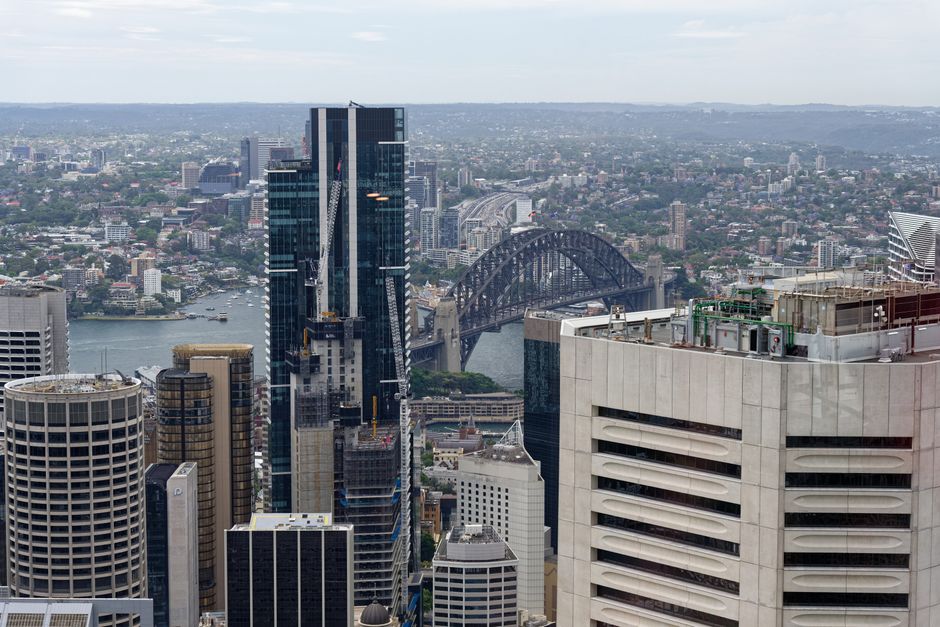
Sydney's innovation precincts are facing a crunch that has little to do with venture capital sentiment and everything to do with real estate. Industrial land across the city's inner and western suburbs is being absorbed by data centre developers at a pace that is squeezing the warehouses, maker spaces, and light-industrial studios that early-stage hardware and deep-tech startups depend on. The cost per square metre for industrial space in the Ultimo-Pyrmont corridor rose roughly 18 percent in the twelve months to June 2026, according to figures compiled by commercial property advisers active in the market.
Why does this matter now? Because the timing compounds. Melbourne investors pulling out of the residential market following the Victorian government's budget changes are not rushing to redeploy capital into NSW commercial property — and the federal government's implicit support for hyperscale data centre rollouts means that competition for the same parcels of land that startups, freight operators, and housing developers all want is only intensifying. Founders hunting for affordable space to prototype hardware or run small-scale manufacturing need to move sooner rather than later, or adjust their cost models significantly.
Two of Sydney's most established innovation clusters are feeling this acutely. At Tech Central, the 24-hectare precinct anchored around Central Station that the NSW government designated as its flagship innovation district, commercial office rents for fitted-out startup floors are running between $850 and $1,100 per square metre per annum as of mid-2026 — above the CBD fringe average for the first time. The Cicada Innovations deep-tech incubator in Eveleigh, which houses some 50 resident companies working on everything from medical devices to quantum sensing, has a waiting list that its management has publicly acknowledged stretches into 2027.
Further west, the Western Sydney Aerotropolis precinct near Badgerys Creek continues to attract announcements, but infrastructure delivery timelines remain a persistent concern for startups weighing whether to commit to space there now. The Western Sydney University LaunchPad program, which offers co-working and mentorship to student and community founders, reported a 34 percent increase in applications in the first half of 2026, driven partly by founders priced out of inner-city options.
The AI infrastructure wave adds a specific complication for software-focused startups. Analysts at the Reserve Bank flagged in a June bulletin that rapid data centre construction could stoke broader inflationary pressure on industrial supply chains, including the specialised electrical and cooling contractors that fit out tech-heavy commercial spaces. A startup negotiating a fitout in Surry Hills or Alexandria today may find trades lead times running six to nine months, up from three to four months two years ago.
The practical read is this: startups at the pre-seed and seed stage should treat real estate decisions as a strategic variable rather than a residual cost. The Stone & Chalk hub at 11 York Street in the CBD remains one of the more cost-effective options for fintech and SaaS companies that need presence without warehouse footprint — desk memberships there have not repriced as aggressively as standalone leases. For hardware-dependent companies, the CSIRO's Lindfield campus and ANSTO's Lucas Heights facility both run structured access programs that offer lab and fabrication space outside the commercial market entirely.
Series A and beyond companies should be modelling energy costs into their five-year plans now. The NSW government's Net Zero Industry and Innovation Program, which opened its second funding round in March 2026, includes provisions specifically for energy-efficient fitouts in commercial and light-industrial settings — grants of up to $500,000 are available for eligible projects. The deadline for the current round is September 12.
Meta's mass account purge this week — triggered by AI-generated impersonation of real creators — is also a live operational risk for startups whose growth strategies depend heavily on influencer partnerships or social commerce. Founders should audit their platform dependencies and document their audience relationships off-platform before distribution channels shift underneath them again.
The Sydney startup market in mid-2026 is not contracting, but the conditions in which companies are built have changed materially. The founders who price that in now will have fewer surprises later.
How does this story make you feel?
Spread the word
About this article
Published by The Daily Sydney
Daily brief
Free, in your inbox before 7am. Weekdays.
More in Business