Walk along the Corso at Manly on a winter morning, and you'll notice something absent from comparable beach precincts in Miami, Barcelona or the Gold Coast: genuine community. The Northern Beaches aren't just a destination—they're a lived ecosystem where locals outnumber tourists even in peak season, where café owners know your name by week two, and where the ocean remains the true heartbeat rather than a backdrop for development.
What sets Manly apart globally is its democratic accessibility. Unlike Bondi, which has gentrified dramatically over the past decade, or California's Santa Monica, where median property prices exceed AUD $3 million, the Northern Beaches maintain surprising affordability within a 30-minute train ride from the CBD. A flat white costs around $5 at most beachside venues—comparable to London, half the price of San Francisco. This economic diversity creates authenticity you won't find in heavily manicured beach communities.
The natural landscape itself is distinctive. Shelly Beach remains Australia's first marine protected area, established in 1975, offering snorkelling opportunities rivalled only by the Great Barrier Reef among Australian destinations. Walk from Manly to Shelly in 15 minutes and you've experienced biodiversity comparable to dedicated nature reserves elsewhere. Few global beach cities offer this—most require significant travel inland or by boat.
There's also the Northern Beaches' unique relationship with Indigenous culture and modern coastal living. The area's traditional Gadigal and Guringai custodians' presence is increasingly visible through public art and community initiatives, creating a layered cultural narrative absent from most Western beach precincts, which typically present sanitised, post-colonial narratives.
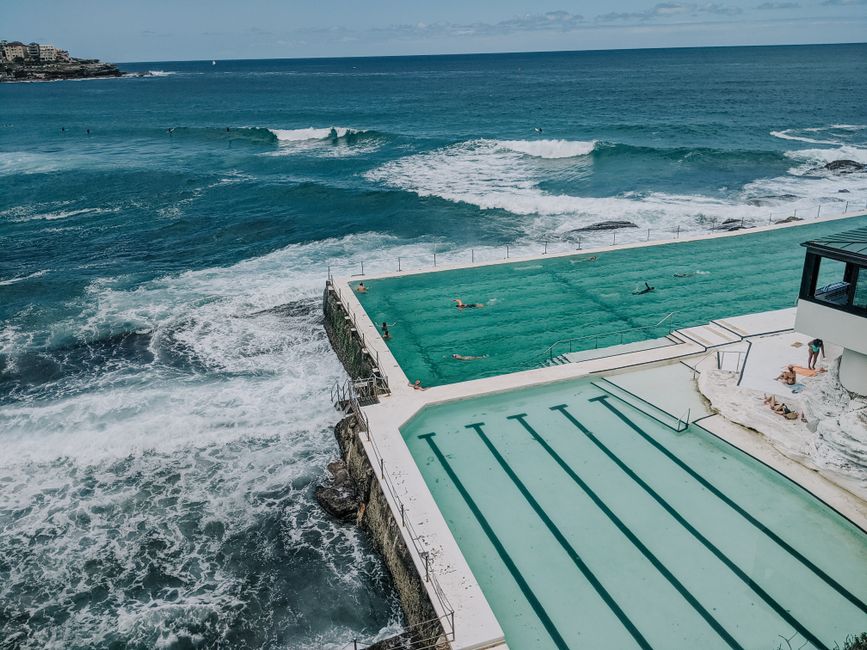
The lifestyle infrastructure tells another story. Manly's Ocean Pool, built in 1935, represents a specific Australian innovation—seawater pools carved into coastal rocks. Similar pools exist in Sydney (Clovelly, Collaroy), but not consistently worldwide. They embody a distinctly Australian solution to combining ocean swimming with safety, something Mediterranean and Caribbean beach communities haven't replicated.
Winter here (currently mid-winter) reveals another distinction. While places like Bondi become crowded with holiday-makers, the Northern Beaches offer genuine seasonal rhythm. Water temperatures hover around 17 degrees Celsius, the light is crystalline, and beaches like Freshwater and Curl Curl attract serious swimmers rather than Instagram tourists.
The weekly markets—Manly Food & Wine, the monthly Craft Markets in Seaforth—showcase local producers in a way that feels genuinely community-focused rather than commercialised. You're supporting actual makers, not franchises.
That's what makes the Northern Beaches genuinely rare: accessibility without pretence, natural beauty without isolation, and community that hasn't been entirely consumed by global tourism. Few cities worldwide manage all three simultaneously.
This article was compiled by AI and screened before publishing. See our editorial standards.