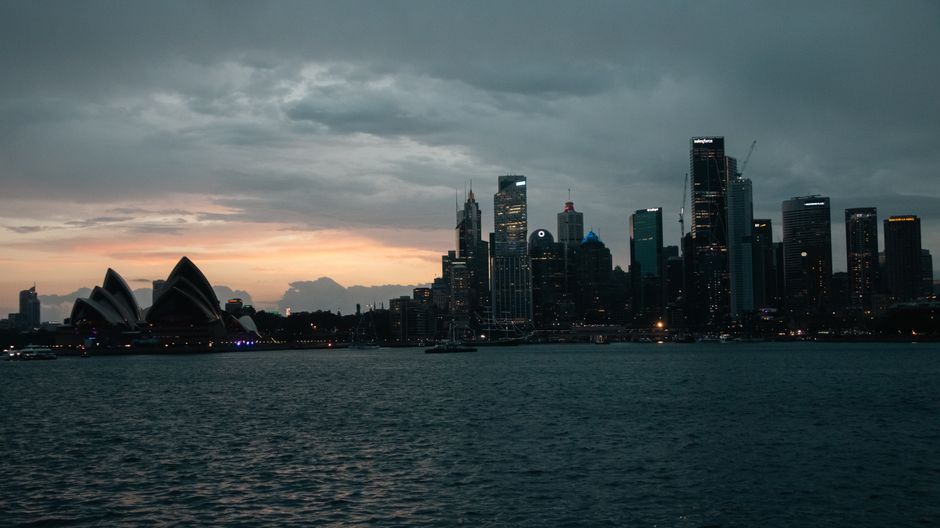
The United States turned 250 this week, marking a milestone that should have reinforced its role as the world's steady democratic anchor. Instead, the celebrations in Washington coincided with moves that have left allies scrambling and adversaries calculating fresh opportunities—a pattern that has profound implications for Sydney's role as Australia's gateway to global commerce and migration.
This week alone, the American administration signalled contradictory positions on trade tariffs affecting Port Botany operations, walked back commitments on climate agreements that Sydney's western suburbs depend on for manufacturing investment, and reversed course on immigration quotas that directly impact skilled worker visas to Australia. For a nation that spent decades being the world's rules-enforcer, the inconsistency is striking.
"What we're seeing is a superpower that built its influence on predictability now operating on impulse," said Dr. Michelle Chen, international relations fellow at the University of Sydney's US Studies Centre in Camperdown. "That's destabilising for regional powers like Australia that have built their entire strategic and economic architecture around American reliability."
The reverberations are already visible in Sydney's corridors of power. NSW trade officials at Barangaroo are recalibrating investment expectations. Immigration lawyers in the CBD report increased uncertainty among American clients seeking Australian residency. And in Western Sydney's manufacturing belt from Penrith to Parramatta, businesses dependent on US supply chains and investment are reassessing long-term planning.
What distinguishes this moment from previous American policy swings is the scale and speed. The post-1945 order assumed Washington would maintain institutional constraints and alliance discipline. Today, that assumption no longer holds. Beijing and Moscow are watching the same signals Sydney is—and they're drawing conclusions about opportunity.
For Australia, the implications are serious. Sydney's property market, already strained with median house prices exceeding $1.2 million in inner suburbs, depends partly on international investment flows and migration settings. Our trade through Port Botany, worth hundreds of billions annually, assumes rules-based global commerce. Our security alliance assumes American commitment to regional stability.
The irony is bitter: America at 250 remains militarily dominant and economically powerful. But as a reliable global citizen, it has become something newer and more dangerous—a force whose next moves cannot be predicted even by those who've been its closest partners.
In Sydney's boardrooms and government offices this week, the message was clear: plan for volatility.
This article was compiled by AI and screened before publishing. See our editorial standards.