Sydney's Transport Crisis Drives $20 Billion Metro West Investment
Two decades of congestion, population growth and deferred decisions have transformed infrastructure from a footnote into the state's defining political battleground.
Two decades of congestion, population growth and deferred decisions have transformed infrastructure from a footnote into the state's defining political battleground.
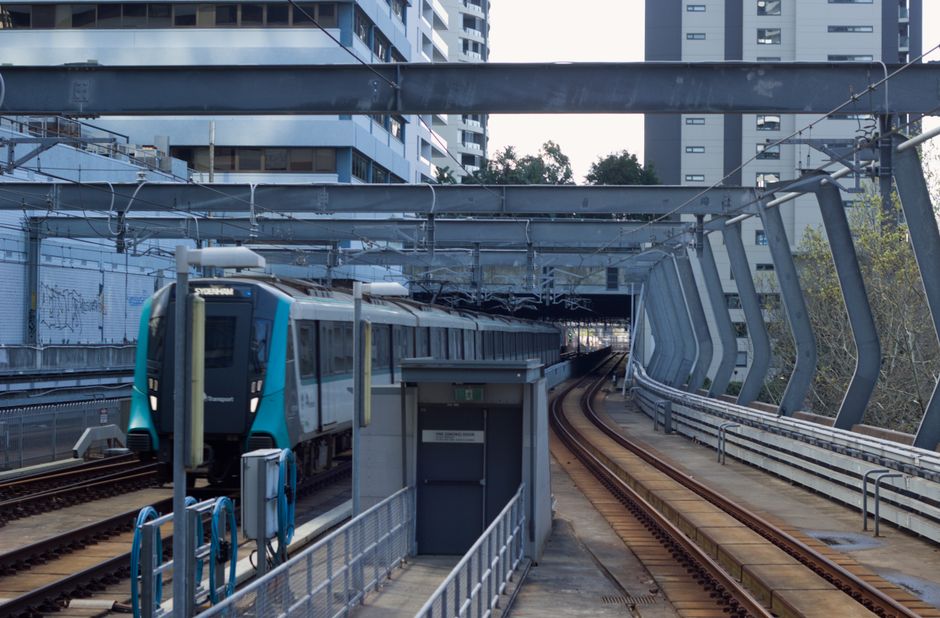
Sydney's current transport predicament didn't emerge overnight. It's the product of decades of population sprawl, aging rail infrastructure, and a series of political calculations that repeatedly punted major decisions into the future.
The story begins in earnest in the early 2000s, when Western Sydney's population boom caught planners off guard. Penrith, Campbelltown, and the sprawling outer suburbs of Blacktown and Parramatta were growing faster than infrastructure could accommodate. The M7 motorway, opened in 2005, initially seemed to offer relief—but it quickly became another congested artery in the greater western corridor. Today, motorists on the M4 and M7 routinely face 45-minute commutes during peak hours.
Meanwhile, the rail system—a Victorian-era spine that still defined Sydney's geography—struggled under weight it was never designed to carry. The North Shore Line, Western Line, and Bankstown Line had become victims of their own success: crowded, unreliable, and increasingly unable to serve growth corridors that didn't fit their historical routes.
Between 2010 and 2020, greater Sydney's population grew by nearly 1 million people, yet public transport investment stalled in relative terms. The city added 400,000 jobs in Western Sydney alone, but transport connections to those jobs remained tenuous. A worker in Penrith commuting to Parramatta faced a journey that often required a car, despite both being major employment hubs.
The housing affordability crisis, which saw median prices in inner suburbs like Strathfield and Enmore exceed $1.5 million, pushed younger workers further west. Suburbs like Schofields and Gregory Hills became dormitory communities, their populations dependent on car-based commutes into the city. Traffic modelling showed the western motorway network would reach capacity well before 2030.
This convergence—population pressure, employment geography mismatch, aging rail infrastructure, and political appetite for major projects—created the conditions for Metro West. The $20 billion commitment represents both acknowledgment of past under-investment and an attempt to rewire Sydney's transport fundamentals.
The project, stretching from Westmead through Parramatta, the CBD, and eventually to Sydenham, reflects lessons learned the hard way: that Sydney's growth couldn't be managed by incremental motorway upgrades, that rail networks needed flexibility, and that integration between job locations and residential areas required genuine alternatives to private vehicles.
Whether it's sufficient remains the real question. But the path to Metro West tells us something important: Sydney's infrastructure challenges are as much about how we planned—and failed to plan—as they are about present-day construction timelines.
This article was compiled by AI and screened before publishing. See our editorial standards.
How does this story make you feel?
Spread the word
About this article
Published by The Daily Sydney
Daily brief
Free, in your inbox before 7am. Weekdays.
More in News